A player asks an NPC to inspect a locked cabinet. The generated response includes a command to use the only brass key. The command names a real item and a real cabinet, and its fields have the expected types. Executing it would still turn a request for information into a commitment the player did not choose. The integration needs a rule for which actions this interaction permits.
OWASP’s Excessive Agency guidance identifies unnecessary functions, excessive permissions and excessive autonomy as routes to damaging actions from LLM systems. It recommends narrow tools, limited privileges and authorization enforced by downstream systems. Applied to this scene, the game must decide whether the proposed action is allowed before changing inventory or quest state. That application is our design proposal; the guidance does not test this cabinet interaction.[1]
Give inspection a small set of actions
Start by separating what inspection can reveal from what opening the cabinet spends. An Inspect interaction may read the cabinet’s condition and reveal an authored description. An Unlock interaction may consume the key and change the cabinet state. The model can propose either action in text, but only the actions granted to the active interaction should reach the corresponding game operation. A prompt telling the NPC to be careful cannot substitute for that boundary.[1]

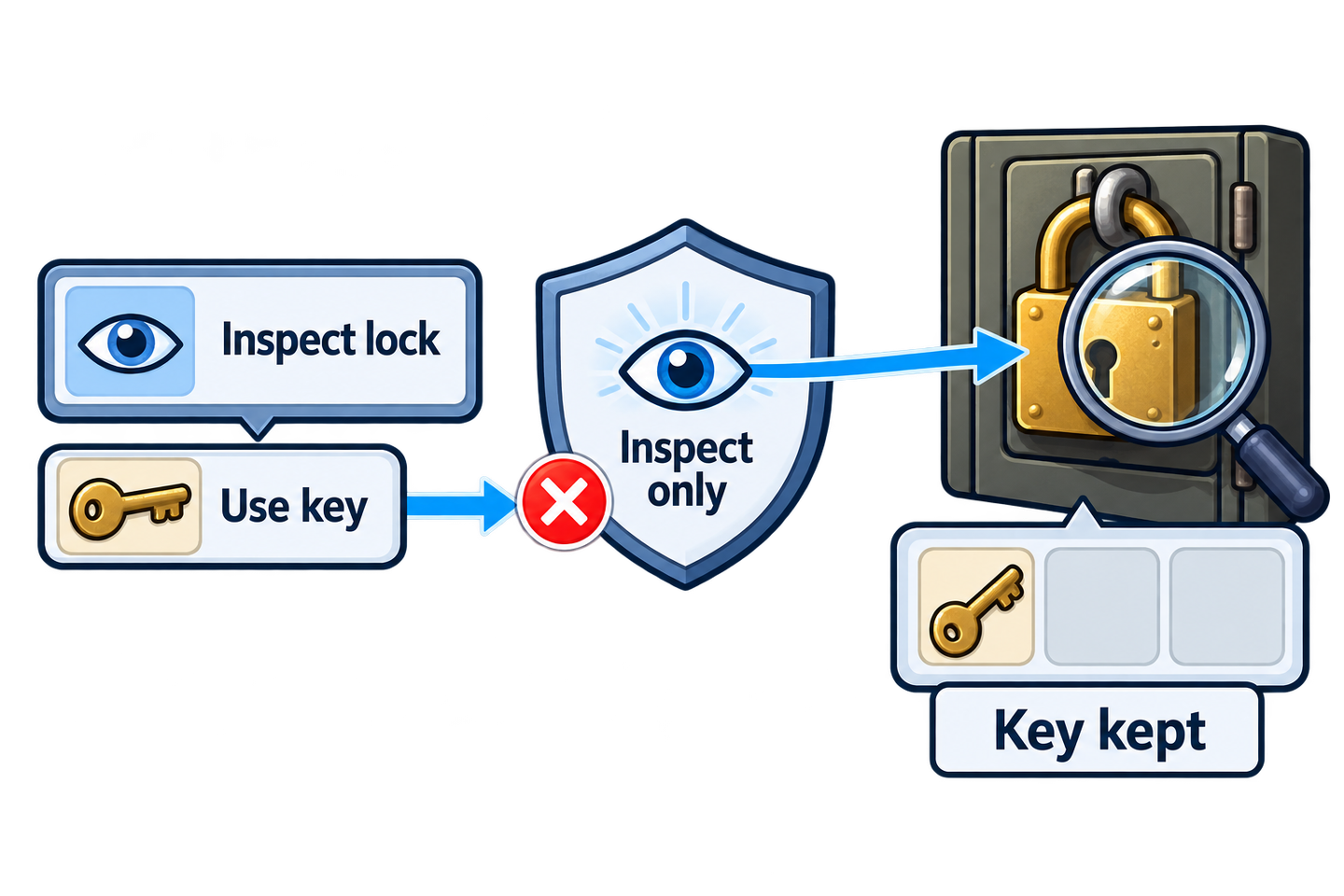
For this proposed scene, expose only inspection to the model during Inspect. Keep the underlying unlock operation behind the game’s normal explicit interaction. If the architecture shares a command dispatcher, it must independently check the current interaction’s permitted actions on every request. A request for Unlock received through inspection is refused even when the key exists. Checking inventory alone would miss the problem: possessing an item does not establish permission to spend it.
When the player actually chooses Unlock, the game still checks the current actor, target, inventory and quest conditions at the moment of execution. The player may have moved away or used the key elsewhere while a response was being prepared. Bind the proposal to its interaction and reject one whose relevant state has changed. Any confirmation should describe the action and cost the game will execute. Confirming a vague line of dialogue should not authorize a different operation hidden inside it.
Keep the refused action playable
A refusal needs a useful next state. Here the cabinet stays closed, the key stays owned, and the player can finish reading the inspection result. The UI can offer the ordinary Unlock interaction when it is available. Avoid displaying generated narration that says the cabinet opened before the game accepts that action. Let accepted state changes supply the facts that subsequent dialogue describes, so the response cannot announce a reward that was never granted.
For a small prototype, a developer can first connect one read-only inspection action and reuse the existing authored unlock path. A writer owns the inspection result and the refused-action response; a tester checks that neither can accidentally claim success. Defer generated inventory writes until the team can maintain their permission and state checks. This sacrifices the convenience of an NPC completing the whole exchange, while preserving a route to inspect and open the cabinet. The work depends on the existing dispatcher and save system; no effort estimate has been measured here.
Applying this to your game
Exercise the same scene with a valid inspection, an unexpected Use key command, a nonexistent item, a changed cabinet, and a response arriving after the interaction closes. Inspect the saved inventory and cabinet state after each attempt. Then deliberately invoke the normal Unlock action and check that it remains reachable. These are proposed integration checks. Passing them would support those tested boundaries, without establishing that every generated command or prompt injection has been contained.
Keep a separate player question: can someone understand what happened and continue? A rejected command may preserve state while leaving a confusing conversation. Observe whether players can distinguish inspection from opening and find the intended next action. If generated action proposals add useful play that the authored route cannot support, expand one specific operation and pay for its checks. If they only create another way to spend the same key, keep the existing interaction and spend the iteration on its explanation.
Sources
- LLM06:2025 Excessive Agency
article · OWASP Gen AI Security Project 2025 risk entry; substantive body read October 24, 2026 · Source accessed: