Imagine a game in which the player should notice a sealed parcel on a workbench and choose whether to open it. The team wants to learn whether the scene communicates that possibility. A moderator begins by asking the player to open the parcel. The participant does so. The recording now answers something about carrying out the action after a cue, while the team’s original discovery question remains open.[1]
Steve Bromley’s study-design guide explains that task wording can reveal information a player did not have. It also asks researchers to account for knowledge players would normally acquire earlier in the game. These considerations pull in different directions: preserve the discovery you want to observe, while supplying prerequisites that the finished game would already have taught. The moderator needs an explicit reason for each piece of information they provide.[1]
Write the question before the instruction
For the parcel scene, first decide whether the study concerns noticing the object, understanding that it can be opened, using the control, or enjoying the consequence. Those questions require different opportunities to act. A broad instruction to play through the room can support a discovery observation. A direct request to open the parcel can support an execution question when discovery is outside scope. Neither instruction answers every question about the scene.[1]

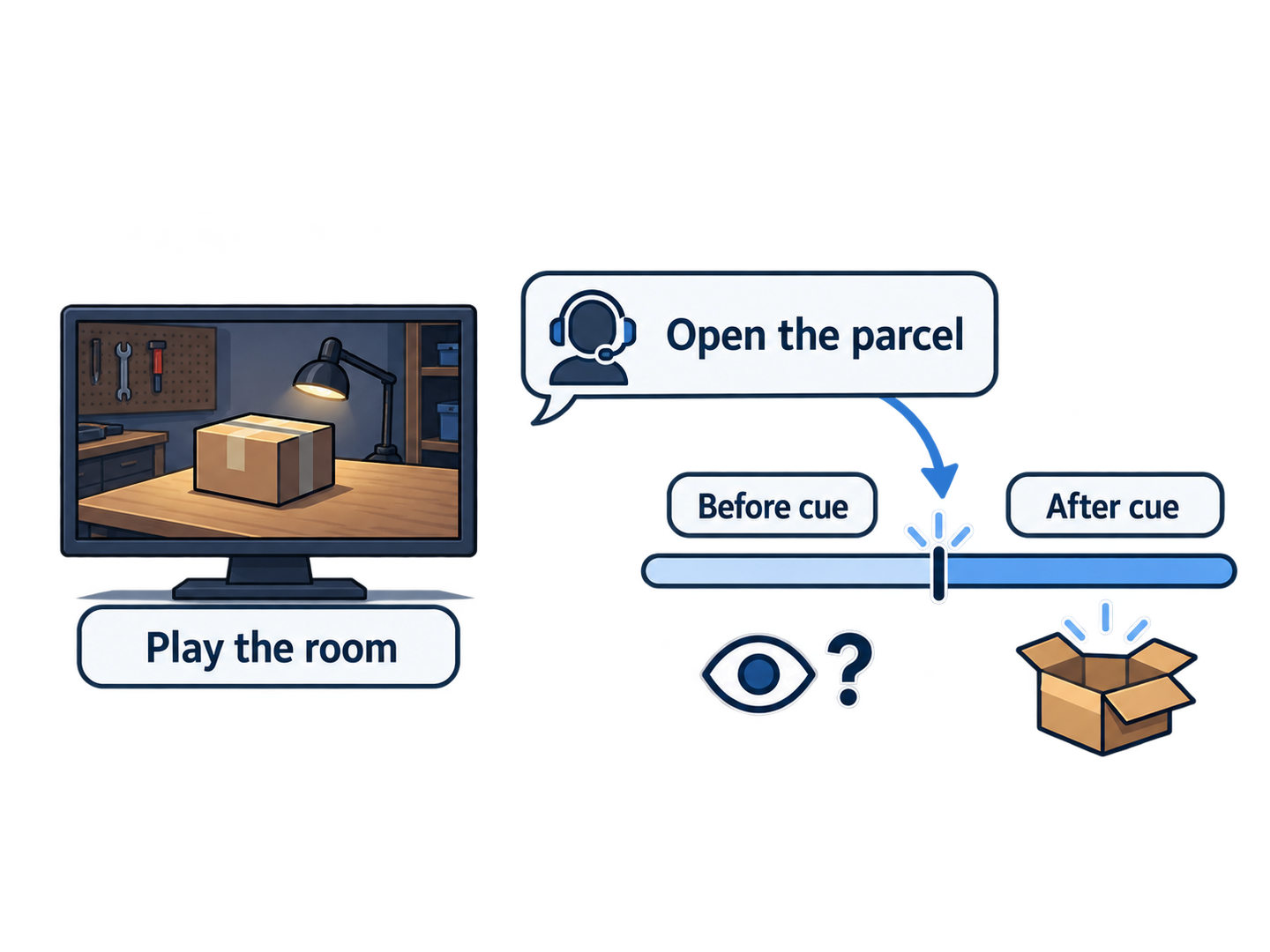
Record the exact opening prompt in the discussion guide. Also record the prior game knowledge the session assumes: movement, looking around, and the interaction control, for example. If participants start midway through the game, provide the relevant preparation consistently. Keep that preparation separate from the parcel clue. If learning the interaction control is itself the study objective, teaching it first would remove that question too. The team should decide which uncertainty it is buying evidence for.[1]
A moderator can still help when a session stalls. Before doing so, note what the player attempted and ask an open question about what they are trying to do, without naming the hidden action. If the moderator eventually points out the parcel or its control, record the wording and its place in the session. Further play can reveal whether the control works or the consequence makes sense. Mark the assisted portion so later analysis does not count it as unaided discovery.[1]
Keep the cue visible in the evidence
The smallest useful record can be a note attached to the existing session timeline: before the prompt, what information was available and what happened; after the prompt, what changed. Keep behavior distinct from the player’s explanation. A participant saying they knew about the parcel deserves attention, yet that statement alone cannot establish when they noticed it. Preserve the report alongside the recording rather than silently deciding that either source settles the whole question.[1]
This preparation costs researcher time. For a small study, prioritize the discovery decision that could change the next build and remove secondary questions that require incompatible instructions. Review the guide with the designer before sessions begin, including when help is acceptable and which post-help observations remain useful. An elaborate coding scheme is unnecessary if the team only needs to distinguish an unprompted attempt from an attempt made after a specific cue.[1]
Applying this to your game
Choose one discovery moment and inspect the instructions, setup and moderator interventions that could reveal it. Agree on the expected prior knowledge and a consistent opening prompt. During sessions, retain the sequence of actions and assistance. If players repeatedly miss the parcel before help, investigate visibility or the invitation to interact. If they notice it and choose to leave it sealed, examine that choice before redesigning the cue. These are proposed interpretations to investigate, not diagnoses established by a completion count.[1]
Change the plan if a broad task produces too few relevant encounters to inform the next decision, or if participants lack prerequisites the real game reliably teaches. A more directed task may then be useful, with its narrower claim stated clearly. Time spent after a cue still has value. Its value depends on the question the team can now answer, and on keeping the missing discovery evidence visible.[1]
Sources
- Designing a games user research study
article · Steve Bromley author-site book extract; page updated January 1, 2021; retained October 20, 2026 snapshot · Source accessed: