A player asks for help with a valve puzzle. The answer appears on a terminal in the hallway, two rooms away. Reaching it means leaving the valve positions, reading the message, and returning with the instruction in memory. The text may be accurate, yet the delivery has added another task at the moment the player asked to get moving again.
Lisa Spira’s Hints and Hinting Systems identifies inconvenient location as a burden: a hint far from the current puzzle may be difficult to use or may go unnoticed. She recommends choosing a method that delivers help effectively before considering how it fits the fiction. These are practitioner judgments about escape rooms, not a controlled comparison of digital interfaces.[1]
For the proposed valve puzzle, try a readable note beside the controls. The player should be able to consult it while seeing the valve arrangement. The change addresses access to the message. It says nothing yet about whether that message reveals too much, explains enough, or fits what this player has already tried.

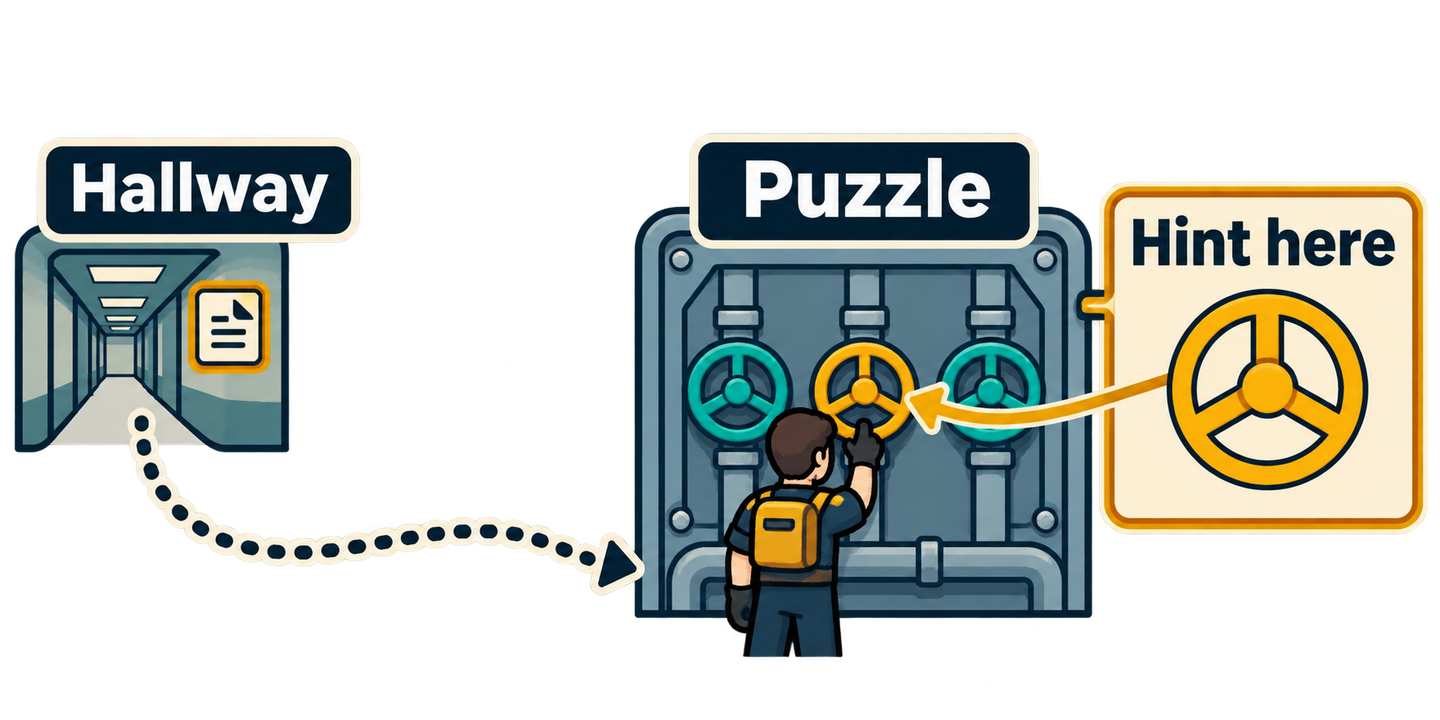
Trace the whole trip
Follow one request from the Help control to the next valve action. Where does the message arrive? How does the player notice it? Can they return to it after touching a control? If opening the note covers the valves, the hint is physically nearby on screen while still separating the instruction from the thing it describes.
Keep the first implementation small: one optional panel that can stay open beside the puzzle, with a clear way to dismiss and reopen it. Reserve space so it does not cover the relevant control. A voice message may suit the scene, but a replayable text version could be needed when speech is missed. The exact presentation depends on the available screen and input method.
Choose the delivery before adding spectacle
A team with time for one revision could move the existing hint panel and check its layout before building a talking portrait in the hallway. That gives up an atmospheric interaction and some fiction-specific character work. It also avoids spending those hours on a device whose location still makes the requested help inconvenient.
The hallway terminal may be the right choice when the intended puzzle includes a shared reference station and players can consult it without losing their place. A cooperative group may also divide reading and manipulation between people. Those possibilities need observation; they do not make the extra trip free for a solo player.
Observe access separately from solving
In a planned playtest, watch what happens after the player requests help. Record whether they notice the message, reach it, reread it, and return to the relevant control. Keep these observations separate from solving the puzzle. Success could come from guessing, while a player who reads the note easily might still receive an unhelpful instruction.
If nearby delivery covers the puzzle or repeatedly interrupts players who are about to solve it, revise its presentation or timing. If players can use the hallway station comfortably and value that interaction, keep it. The proposed priority is to remove a demonstrated delivery burden; no player session or comparison has been run for this example.
Sources
- Hints and Hinting Systems [Room Design]
article · Primary author article; scoped reading2026-11-04 · Source accessed: