A player spends the expedition finding copper and a heat-resistant shell. At the workbench, they select a lantern recipe and wait for the progress bar. The gathering route may have offered difficult choices. The bench currently adds a delay, and the team is considering a timing challenge to make that moment more interesting.
Raph Koster’s historical game-design essay separates preparation from the challenge that follows it. In his crafting discussion, collecting ingredients can carry the decisions while combining them offers little to do. His diagnostic asks whether a rule can support different challenges and whether players have abilities to bring to them. The essay was written in 2004 and posted in 2012 with a warning that his understanding had changed. Treat it as a design question, rather than a proven recipe for fun.[1]
For this proposed lantern, first decide what remains negotiable at the bench. Suppose the same gathered materials can become a bright lamp that drains quickly or a dim lamp that lasts through a longer tunnel. Let the player see that tradeoff and select an output. This adds a decision about the next expedition without making them repeat a dexterity test for every lantern.

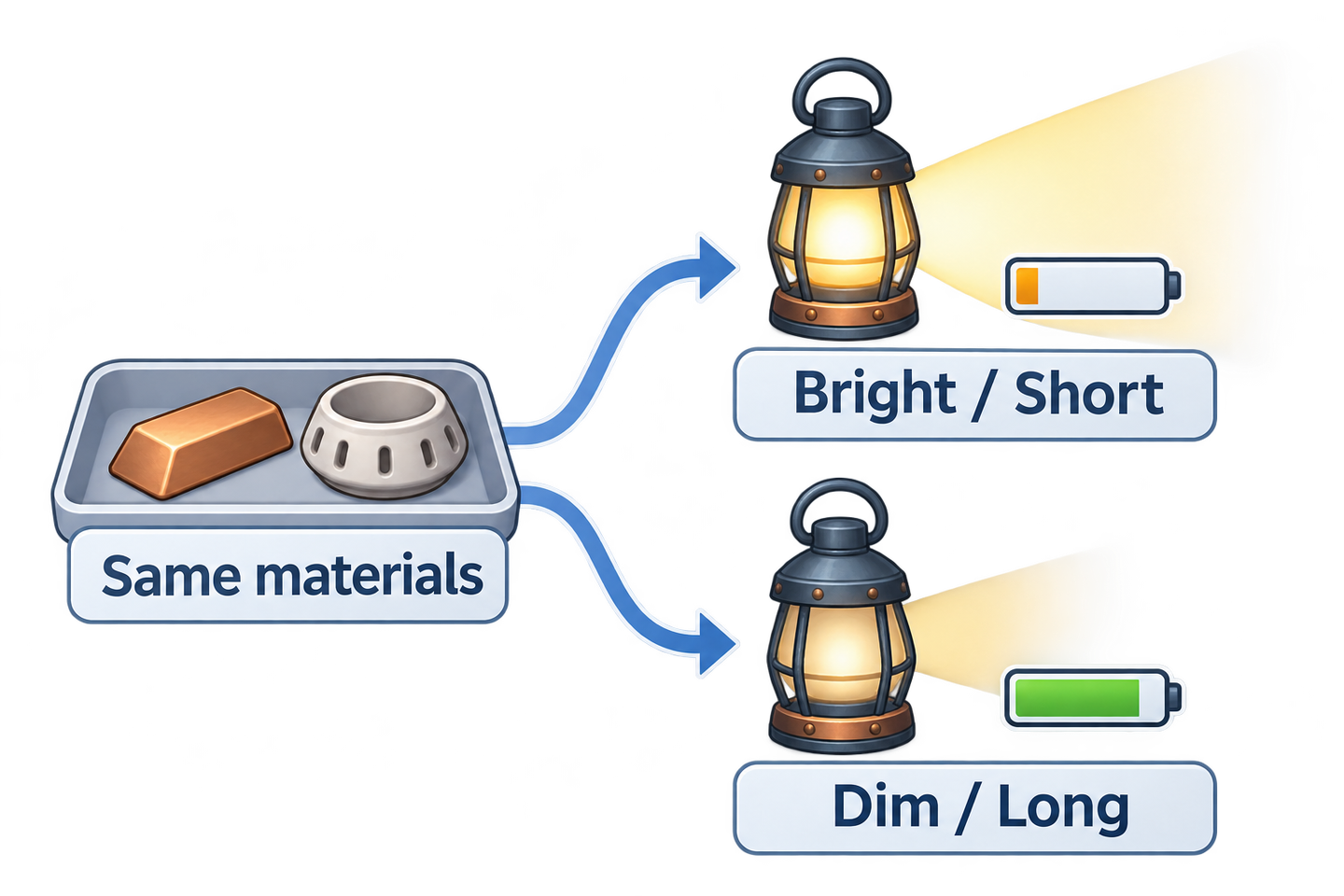
Trace one choice into the next trip
Keep the first prototype to one recipe and two outputs. The bright lamp could make nearby hazards easier to inspect, while the longer-lasting lamp could support a route with fewer places to recharge. Those differences must exist in the proposed game before the labels matter. If both routes remain equally easy with either lamp, the bench may offer a cosmetic preference rather than the strategic decision the team expected.
The player also needs enough information to choose. Show the intended output before consuming materials, explain the brightness and duration tradeoff in ordinary words, and check that cancelling leaves the inventory unchanged. A larger crafting tree would multiply these promises before the team has learned whether this one is understandable.
Pay for the decision you add
This version requires two output configurations, readable previews and a place where the difference affects play. It gives up the physical rhythm and mastery that a timing challenge might provide. A timing game may deserve its cost when performing the craft is central to the experience; the alternative here suits a game whose main decisions concern preparing for an expedition.
There is also a cheaper option: keep the fixed recipe and make the bench immediate. Gathering may already provide enough play, and the workbench may serve as a quiet transition. The design question is whether the added bench action earns its time and implementation work in this game. A general requirement that every station be a minigame cannot answer it.
Check the choice before expanding the recipe list
In a planned playtest, ask players what each lantern would let them do before they commit materials. Then observe which route they attempt and whether they can use the difference they expected. Keep their explanation separate from the choice itself: selecting the bright lamp does not show that they understood its shorter duration.
Revise the outputs if players cannot distinguish a useful tradeoff. Remove the choice if it merely adds a menu between gathering and the next trip. Conversely, if players value performing the craft and find the output menu uninteresting, test a small timing version before ruling it out. These are proposed checks for this example; no lantern prototype or player comparison has been run.
Sources
- An atomic theory of fun game design
article · Historical2004 essay posted2012-01-24; authored body read2026-11-07 · Source accessed: