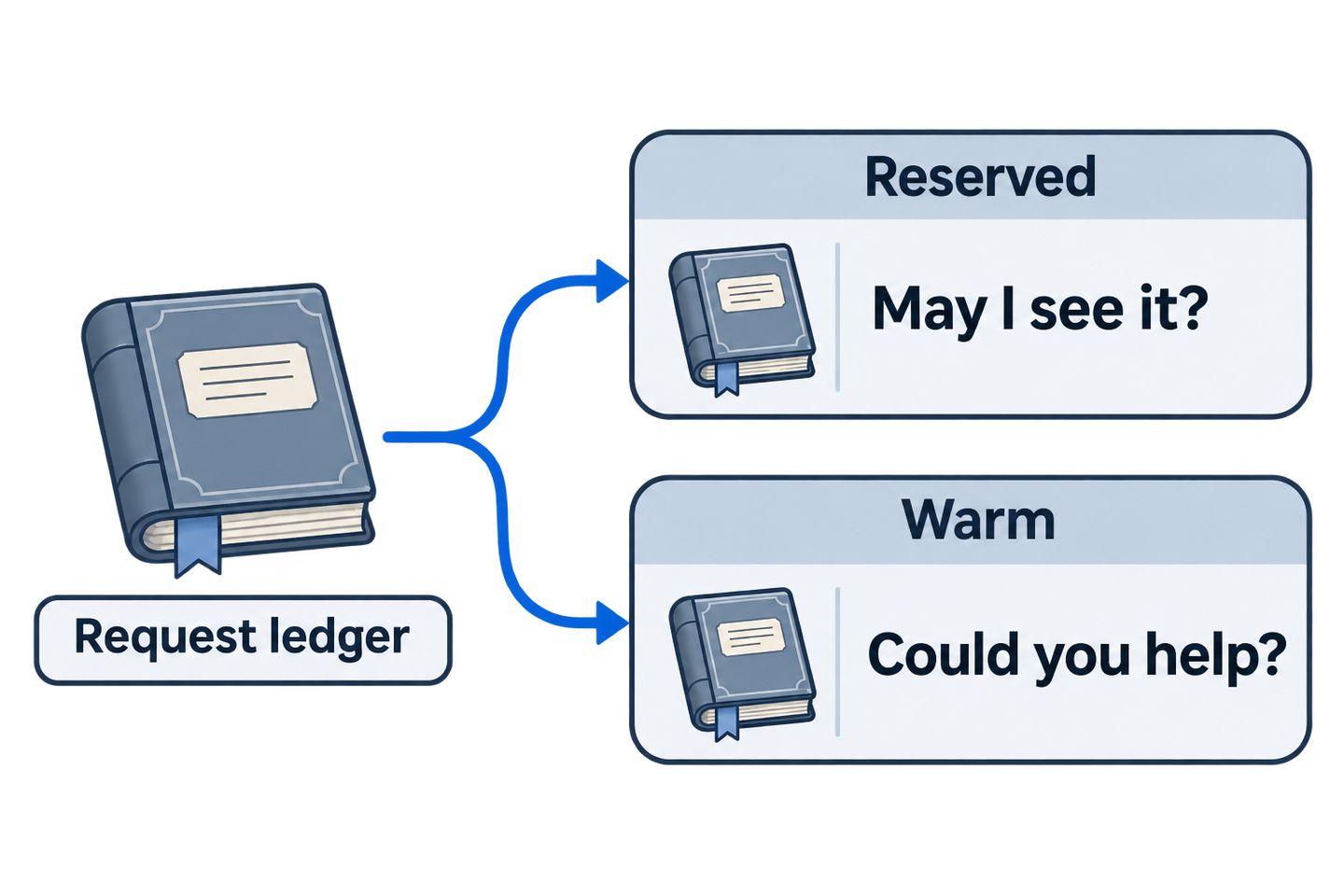
A player needs to ask a clerk for a ledger. One dialogue option makes the request warmly. Another avoids the request and offers a compliment. If the game filters out the warm line because the player chose a reserved character, the remaining menu may no longer let them ask for the ledger at all. A style preference has quietly removed an intention.
Inspect the acts available after filtering, as well as whether each surviving sentence sounds in character. For this proposed exchange, requesting the ledger and leaving the conversation are supported acts. A reserved request might be “May I see the ledger?” A warmer version might be “Could you help me find that entry?” Both can begin the same request, with different social presentation. Neither needs to guarantee that the clerk agrees.

Emily Short describes filtering a larger dialogue pool for the player character in Mask of the Rose. In an author reply, she distinguishes choosing how to act from choosing what to do, and explains the aim of offering relevant options without an overwhelming menu. This is her account of a particular design and player-base interpretation, not evidence that trait filtering works for every narrative game.[1]
In the proposed clerk scene, record an intention alongside each authored option: request access, offer reassurance, challenge the refusal, or leave. Keep presentation tags separate. Before showing the menu, inspect whether the supported intentions still have suitable wording. This authoring representation is an editorial proposal; the source does not establish that its game uses these particular tags or checks.
When a request is intentionally unavailable, give that restriction a design reason. Perhaps the player promised not to mention the ledger, or the clerk has ended the conversation. A reserved speaking style alone need not supply that reason. A game about difficulty expressing oneself could deliberately make the request hard to articulate, but then that difficulty is part of the experience being designed and needs its own explanation.
Preserving an act also preserves its social stakes. The reserved line might sound distant, while the warmer line invites a more personal response. If those differences affect the clerk’s reaction, author them deliberately. A shared request identifier should not flatten the exchange into identical emotional meaning or imply equal outcomes. The player can value being recognized in a chosen voice even when no new tactical option results.
The work grows with the number of intentions, styles, relationship states and earlier commitments. A small scene can support two styles and a few explicit acts instead of generating a new line for every trait combination. If an appropriate line is missing, write a neutral version compatible with the established character or reduce the advertised style range. Do not quietly insert an intimate line that contradicts the player’s presentation just to fill a slot.
For a proposed authoring check, traverse each supported style and relationship state and list the intentions offered. Compare the missing acts against intentional restrictions. In a player session, ask what they wanted to do before asking whether the wording suited them. If the desired request was present but went unnoticed, revise the wording or menu organization. If players want meaningful expressive difficulty, reconsider how much freedom the menu promises. These checks have not been run here.
Sources
- Dialogue Expressiveness in Mask of the Rose
documentation · November22 2023 authored essay and June12 2024 author reply; scoped prose read November10 · Source accessed: