The salvage throw works in the prototype. A player can pick up a parcel and launch it toward a moving container. The team can add a crane next, but the throw still gives little indication of why a parcel misses. A new control scheme would bring another interaction to explain while the first remains difficult to judge.
In his 2012 post Fun vs features, Raph Koster uses a bar with darts and a possible pool table to argue that a working feature still needs tuning. He considers controls, repeatable challenge and feedback, then chooses to improve the existing game within the example’s deadline. His later reply allows reconsidering the opening date when that scope would not make a viable product. This is practitioner reasoning, not a measured production formula.[1]
Estimate the unfinished decision
For the proposed salvage game, first name the decision the throw should support. A player might choose when to release, how much force to use or which container is worth risking. If every attempt feels arbitrary, adding more targets may multiply the confusion. If the decision already reads clearly and players want another situation that uses it, a different target arrangement may be worth trying.
Put one missed throw back on screen. Can the team distinguish a control problem from an unreadable trajectory or an uninteresting choice? A landing marker might help with one of those problems and damage another by removing the judgment the player was meant to make. Choose the suspected cause before commissioning a general polish pass.

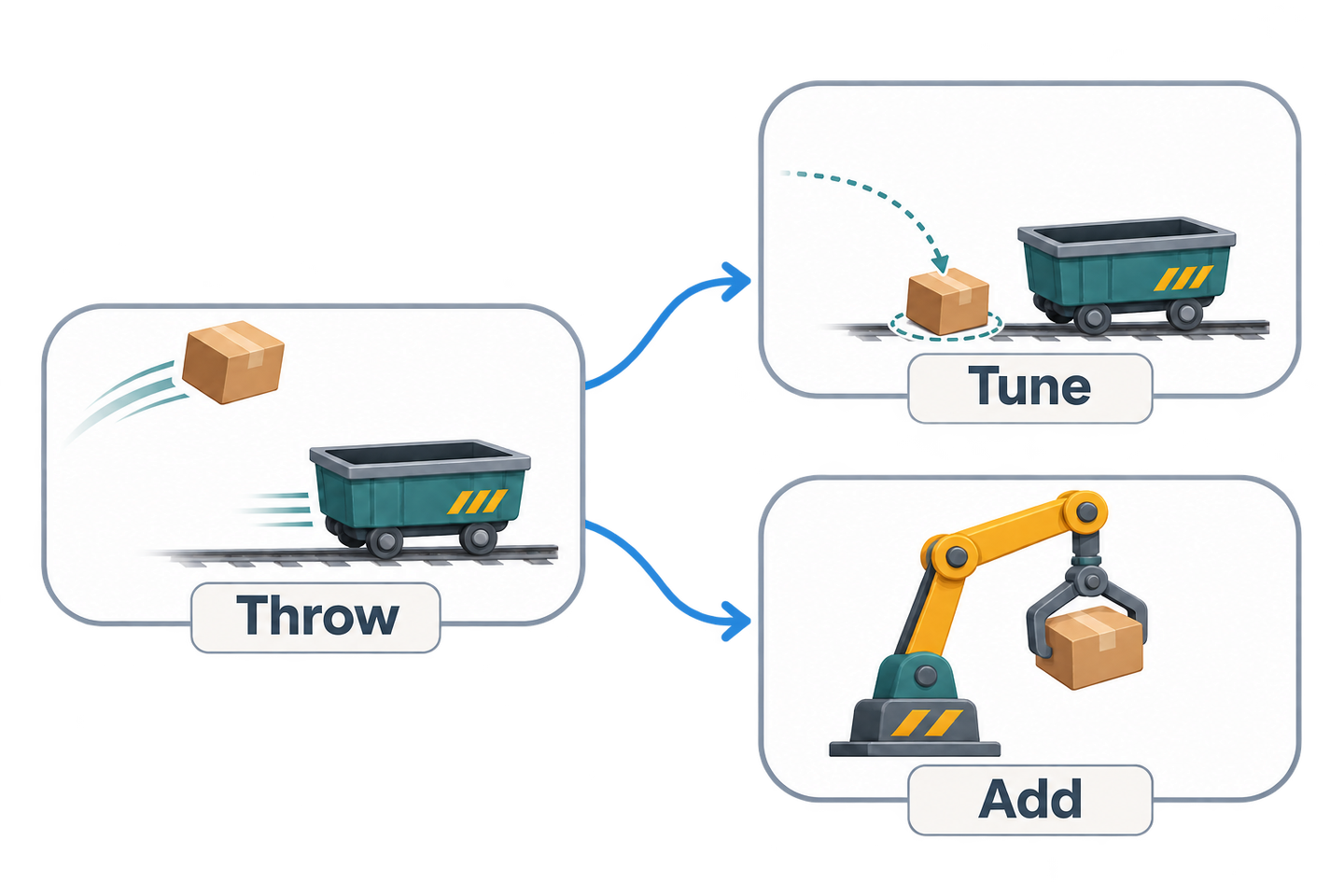
Write the next change as work someone can finish and inspect. For example, retain a brief landing trace after a miss and expose the release point in a developer view. Include implementation, checking controller input and observing a player’s next attempt in the estimate. Do the same for the crane, including its controls, interaction rules and feedback. A list that estimates only the first implementation makes the new mechanic look artificially cheap.
Applying this to your game
Keep a build of the original throw and make one reversible change. Ask a player to complete the same kind of delivery in each version, without coaching them toward the suspected fix. Observe where they release, how they explain a miss and what they change next. A more accurate throw alone does not establish that the intended decision became interesting; ask which part they were trying to judge.
Use those observations to choose the next piece of work. If players can explain the miss but cannot act on that information, revise the control or available response. If they can adapt and the situation no longer asks much of them, try a new arrangement before building a whole new mechanic. Keep the original build so a change that erases useful judgment can be reversed.
Reserve someone’s time to inspect this comparison before promising the crane. The trace, developer view and observation all cost work, and they may reveal a larger flaw. If the release depends on the crane’s distinct experience, a narrower release or a later date may be more honest than indefinitely tuning the throw. The choice should change when the intended experience or actual production evidence changes.
Sources
- Fun vs features
article · First-party post, 2012-01-25; live authored body read 2026-11-02 · Source accessed: