A cooperative rally offers two session buttons: Chase a score and Hang out. A group of friends wants to improve its time together. Picking the first button hides the relaxed lobby tools; picking the second removes the timer. The setup has turned two compatible interests into a forced choice.
Nick Yee’s 2006 study provides a reason to question that division. He analyzed an online motivation questionnaire from MMORPG players into achievement, social and immersion components, with more specific interests within them. A high achievement score did not imply a low social score. These were self-reported motivations in that study’s MMO population, rather than exclusive categories assigned from a match log.[1]
For the proposed rally, try an invitation that says what the session offers: a timed run with friends. Let the organizer enable the timer while keeping the shared lobby available. This combines two requests without promising that the game has identified anyone’s personality. Other combinations may conflict; a ranked competition with open mid-run pauses would need a separate rule decision.

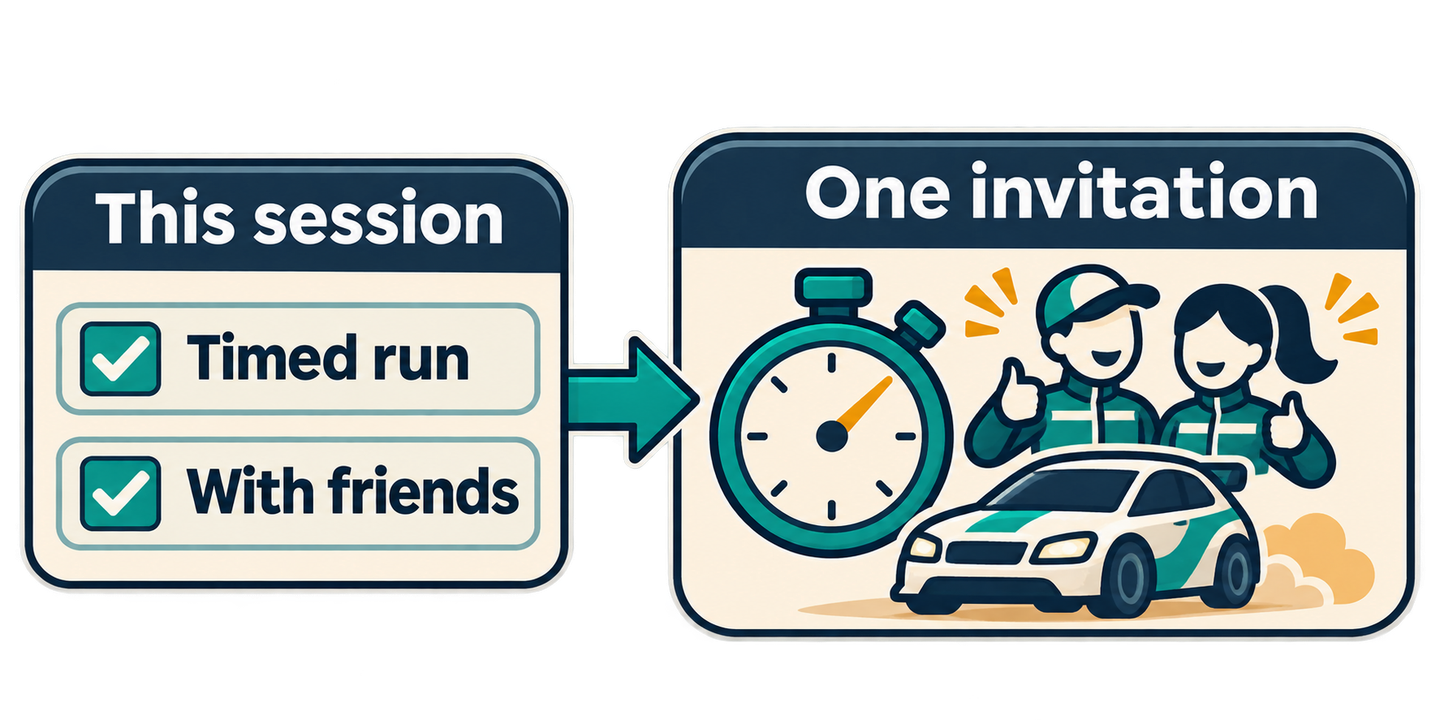
Keep the answer attached to this session
The organizer’s choice describes the invitation they are making now. Show it to the people joining before the run starts. Joining is not evidence that every participant wanted the timer, and completing the run does not establish a preference for tomorrow. If the team stores anything, keep the session settings distinct from an individual preference record.
Start with controls the existing game can actually honor. If the lobby already supports chat and a timer, combining those settings may require little new gameplay. A promise of social play would be misleading if the chosen mode prevents teammates from communicating. Explain the available behavior in the invitation instead of relying on a broad label such as Social.
Applying this to your game
Compare the two exclusive buttons with one invitation that exposes the compatible settings. Ask a group to arrange the session it wants, then have each participant describe the run they expect before joining. Observe whether the organizer can express the group’s plan and whether another person notices a setting they disagree with. Record that disagreement rather than treating the host’s selection as a group answer.
Keep the gameplay fixed during that comparison. If people understand the invitation but the timed run leaves no room for the interaction they wanted, the missing work is in the mode itself. A more detailed preference survey will not create that room. If everyone wants a fast default and understands it, a single preset with an accessible settings control may be enough.
Budget first for the invitation text, compatible settings and a clear way to change the next run. Defer persistent profiling and automatic matchmaking until there is a separate decision those systems must support. The study does not validate this rally interface or show that every motivation can be combined. Retain the earlier setup so the team can reverse a change that makes arranging a session slower without helping the group express its plan.
Sources
- Motivations for Play in Online Games
paper · Cyberpsychology & Behavior9(6),2006,pp772–775; author-hosted four-page PDF read2026-11-03 · Source accessed: