Two recollections can concern the same event while carrying different emotional associations. A roleplaying agent that retrieves only by topic may select a memory that fits the question but changes the character's response in an unintended way. Emotional RAG makes emotional similarity part of retrieval, raising a useful design question about what a remembered fragment is allowed to influence.

Change retrieval before judging the reply
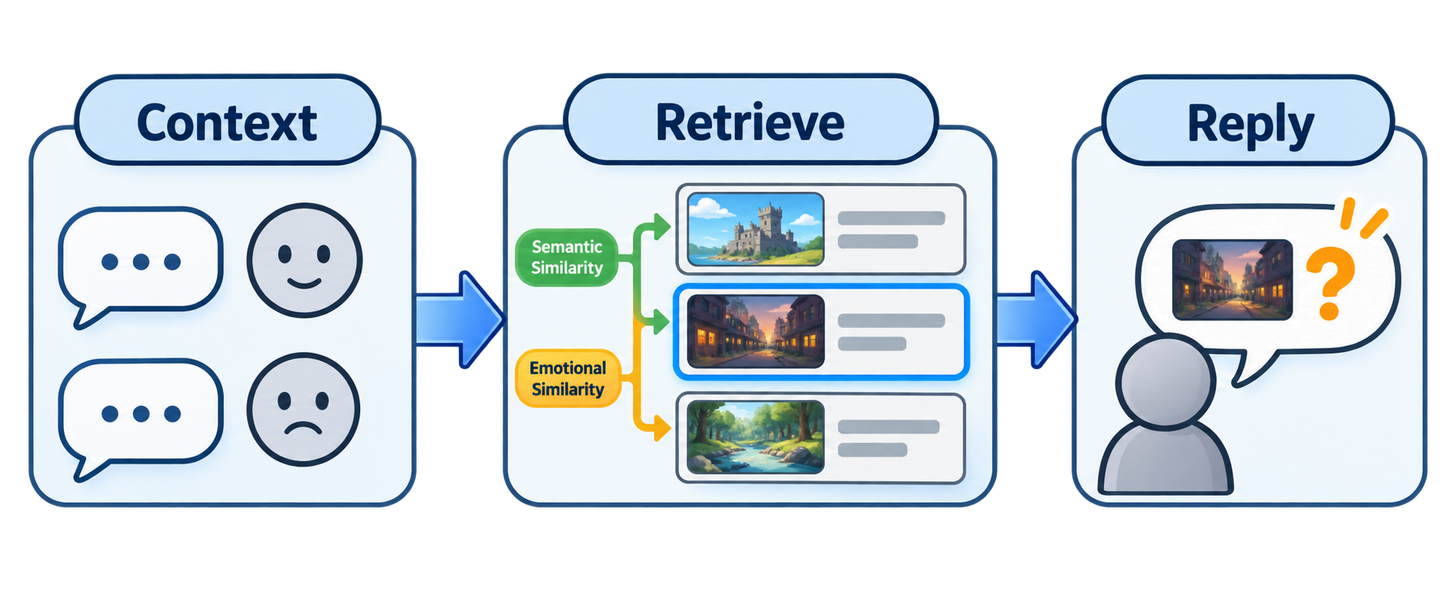
The framework encodes both semantic and emotional aspects of a query and stored memory fragments. Its retrieval strategies either combine the two similarities or use one to select candidates and the other to rerank them. Retrieved fragments then join the character profile and query in the prompt for response generation.[1]
The authors evaluate the approach on roleplaying datasets. Their reported improvements concern those tasks and assessment procedures. The mechanism is inspired by psychological accounts of memory, but a roleplaying-model result does not validate a theory of human mood-dependent recall or show how a player feels in a long-term relationship.[1]
For a game, the useful inspection begins with the selected record. A changed reply may come from a different memory, the character profile or the generator's wording. Reading only the final sentence makes those explanations difficult to distinguish.
Emotional relevance does not establish truth
Suppose a character recalls a disagreement when asked about an old promise. That recollection may shape the manner of the answer, but it should not silently erase an agreement the game actually recorded. A memory fragment, a current emotional interpretation and an authoritative commitment have different roles.
The designer might deliberately create an unreliable recollection. If so, the uncertainty belongs to the experience and needs consequences the player can understand or investigate. A retrieval error should not automatically be reclassified as intentional ambiguity merely because the resulting line sounds emotionally appropriate.
Applying this to your game
For one revisitable conversation, keep the same question and character history while varying the emotional context supplied to retrieval. Inspect the selected fragments before comparing replies. Ask which earlier events become unavailable and which interpretations change. This is a proposed comparison for an accessible prototype, not an Emotional RAG experiment performed here.
Keep the game's commitments in a separate record and check whether the reply honors them even when emotional retrieval favors a different fragment. Include a corrected memory and inspect whether the older account keeps returning. Correction and deliberate forgetting need maintenance alongside retrieval; storing more material can make that work harder.
A short authored callback may be the smaller route if only one prior promise matters. It sacrifices breadth of recalled conversation while making the retained consequence clear. If players knowingly value uncertain recollection and can still act on it, more visible memory controls may be unnecessary. If an omission repeatedly changes a reasonable plan, fund that specific record or correction before expanding the archive.
We have not executed the framework or observed players. The paper gives emotional similarity a concrete place in retrieval; the game still has to decide which record may change a later response and which promise must remain available regardless of mood.
Sources
- Emotional RAG: Enhancing Role-Playing Agents through Emotional Retrieval
paper · 2410.23041v1 (2024-10-30; arxiv_v1_submission_date) · Source accessed: