A model that recognizes a player's behavior does not yet explain what the game should change. The change produces new behavior, which the model may then interpret again. Closing the Loop reviews systems that connect those steps and exposes the work missing when sensing, inference and adaptation remain separate demonstrations.

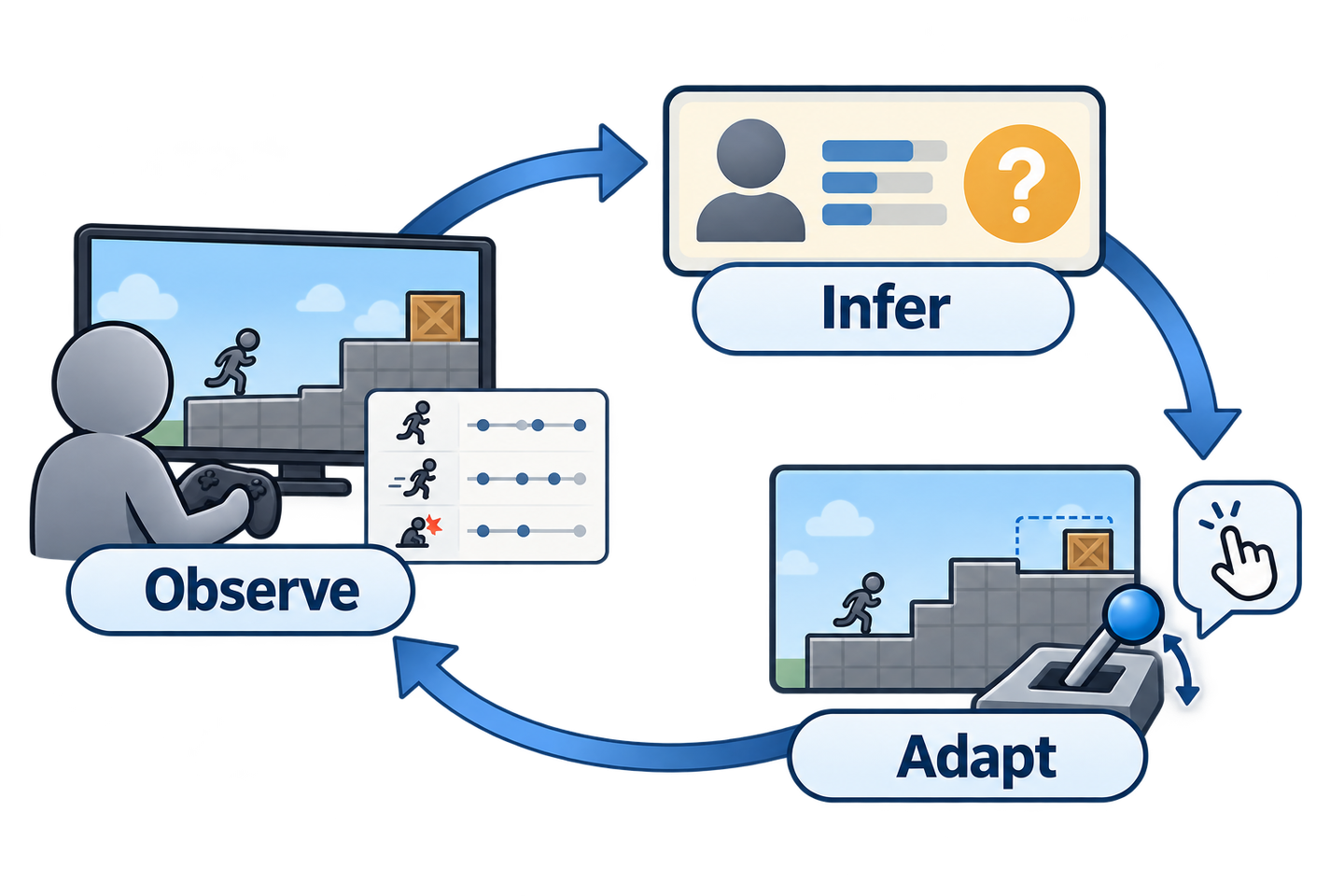
Follow the consequence of an inference
The review defines a complete experience-driven loop through three components: player-driven data, a player experience model and content adaptation that uses the model's prediction. Telemetry, physiological signals or self-reports provide inputs; an inference then influences the game content the player encounters.[1]
The distinction matters when a system calls someone frustrated after repeated failures. The observations are failures. Frustration is an interpretation. Lowering difficulty is a consequential design choice. The next attempt occurs under that changed condition, so its success cannot automatically confirm the original emotional interpretation.
Within its criteria, the review identifies 17 studies implementing the complete loop. Its discussion reports a concentration on difficulty adjustment and comparatively little complete-loop work targeting the initially sought horror, stress and anxiety experiences. That is a finding about the selected literature and review definitions, not a count of every adaptive game ever made.[1]
A model needs a bounded job
The review discusses the use of rule-based and fuzzy methods alongside machine learning, including differences in resource demands and interpretability. It does not establish that a complex predictor is the best starting point for a particular game.[1]
A temporary pacing change may need only a narrow current-state signal. Permanently hiding content behind an inferred preference creates a different promise and a greater cost when wrong. Decide what the inference may change before selecting the data it would be convenient to collect.
Applying this to your game
Trace one proposed intervention through observed input, inferred explanation, content change and subsequent evidence. Write down an alternative explanation for the same input. A pause before a jump might reflect confusion, planning or a deliberate break; those explanations do not all justify making the jump easier.
Compare a fixed adjustment or player-selected setting with model-driven adaptation when those alternatives fit the design. Use an accessible prototype to inspect the consequence and whether a mistaken adjustment can be corrected. This is a proposed evaluation; we have not implemented the reviewed systems or observed their players.
This first comparison postpones a persistent player profile. It still needs useful instrumentation, a decision about when evidence is collected and a way to restore the intended challenge. Repeated questions can interrupt play, so the correction should match the consequence rather than require a survey after every action.
If the narrow signal repeatedly identifies a problem and its temporary response serves the intended activity, it may justify a small automatic adjustment. If people understand the challenge and deliberately want to keep it, revise the intervention or provide a choice. Closing the loop makes that reversal visible: new behavior belongs to the changed game, and the designer remains responsible for interpreting what the change achieved.
Sources
- Closing the Loop: A Systematic Review of Experience-Driven Game Adaptation
paper · 2505.01351v1 (2025-05-02; arxiv_v1_submission_date) · Source accessed: