A player tells a harbor official they plan to sail north, then changes the destination to south before confirming. On their next visit, the official should respond to the confirmed destination if that is the promise your game made. A transcript containing both answers cannot decide which answer still has authority. Write that rule before adding a richer memory system.
The ink documentation provides a modest starting point: global variables can hold story state, change during play and control conditional text or choices. The wider game can also access them. Those features let a writer connect a recorded choice to a later response. The documentation does not establish that your game saves the right value, handles an interrupted confirmation or presents correction clearly. Those are integration and design questions.[1]

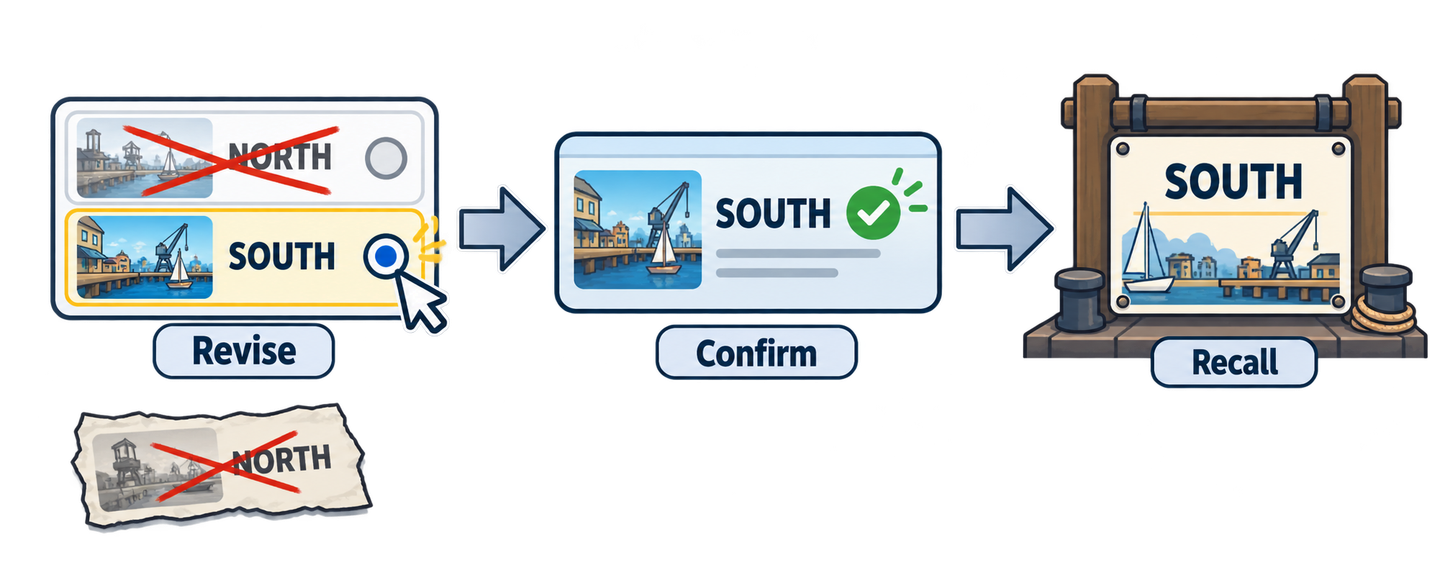
Follow one commitment through the world
In this proposed harbor scene, keep the editable destination separate from the destination the player confirmed. The selection screen can change its draft as often as needed. Confirmation copies the displayed choice into the record the next encounter will read. Show the accepted destination immediately, so the player can see what the world will carry forward. Avoid a second, hidden interpretation that quietly overrides that account.
Decide whether confirmation also launches the ship. If departure has already happened, changing a later plan cannot undo that event. Preserve the actual departure and offer a new route where the fiction supports one. If the choice remains provisional until departure, let the player revise it through the same visible interaction and replace the current commitment. A history of earlier intentions can support a journal without turning every abandoned plan into a permanent promise.
Applying this to your game
Choose one existing callback whose meaning depends on a player choice. Have the narrative designer specify the record it reads and the point after which correction stops being a simple edit. Have the developer trace selection, confirmation, storage and reload to that response. Use a small authored variable if it already expresses the promise. Natural-language retrieval adds little when the only required distinction is the destination currently confirmed.
Propose a local sequence: select north, switch to south, confirm, leave and return. Then reload after confirmation and inspect the same callback. Also check cancellation, an unanswered choice and a save created before this feature existed. Define the unset outcome deliberately; an absent destination should not accidentally become north. If confirmation can be interrupted, show the accepted stored value on return rather than guessing from the last displayed draft.
Reserve the next content pass for the confirmation text, this callback and the corresponding save checks. Defer a larger archive of incidental dialogue during that pass. The developer must identify which existing save mechanism owns the value and what older saves will read. The writer must cover correction and unset states. Neither effort disappears because the data fits in one field. These are proposed checks and work choices, not results from an executed game.
Keep only the promise that matters
The plan changes if existing story state already preserves the confirmed destination reliably. Reuse it and remove duplicate bookkeeping. It also changes if players knowingly want a character to remember the first promise despite a later retraction. In that fiction, retain both events and make the character’s reason understandable. An unreliable character can be intentional; a stale value silently presented as the player’s current account needs repair.
A local replay can establish which value reached the callback. Observe separately whether returning players recognize the commitment and understand how to revise it. If a confirmation screen interrupts an otherwise clear exchange, fold confirmation into an existing choice and show its consequence there. Keep the previous save format readable while changing the feature, and make a smaller continuity promise if the team cannot support correction across the intended return window.
Sources
- Writing with ink
documentation · inkle/ink master documentation, Part 3 sections 1–2; live October 18, 2026, commit not pinned · Source accessed: