Articles / Formats
Research note
Research, explanations, and practical guides in English.
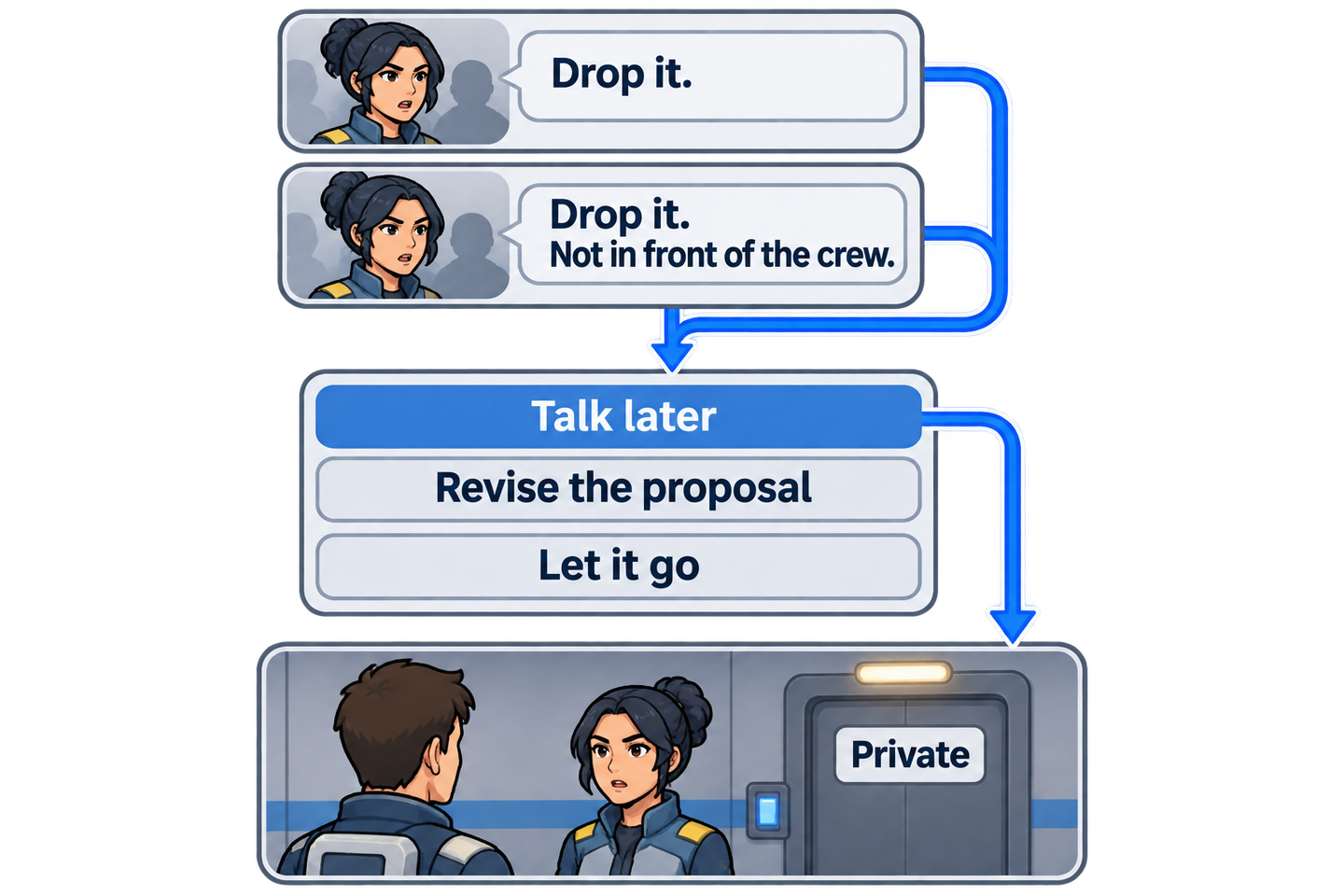
Show What the Refusal Is About
In Prom Week, a believable rejection could still leave players unsure what to do next. A short dialogue exercise asks what players think the crewmate objected to and what they expect their next choice to change.
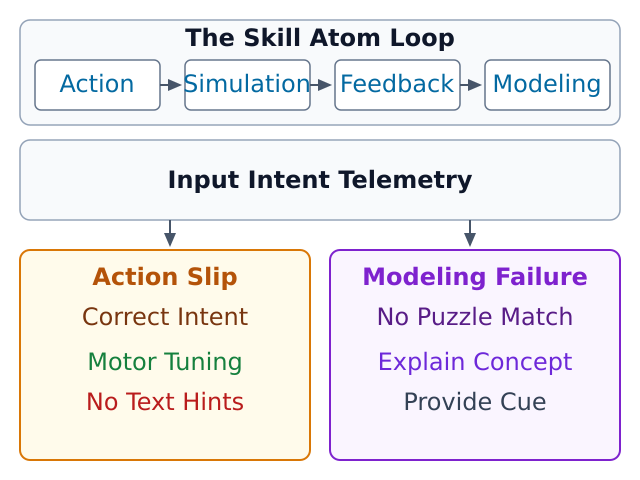
Isolating the Skill Atom Before Offering a Hint
Adaptive hints frequently misdiagnose player struggles by mistaking motor-skill execution slips for conceptual misunderstandings. Applying Daniel Cook's skill-atom feedback loop allows designers to inspect the pre-hint cycle and deliver appropriate assistance.
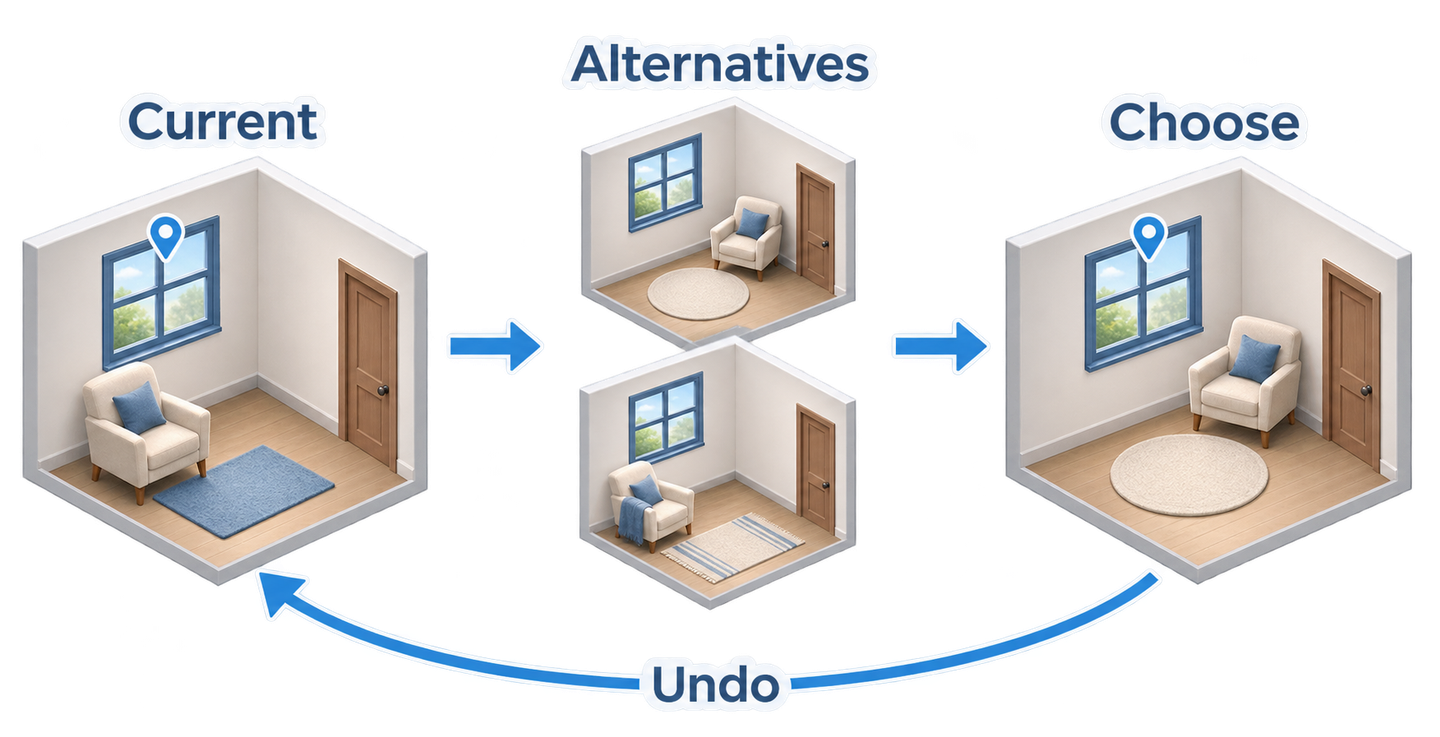
Keep a chosen room while browsing alternatives
A room editor can offer nearby generated alternatives without replacing the version a player has already shaped. The useful boundary is which parts may change.
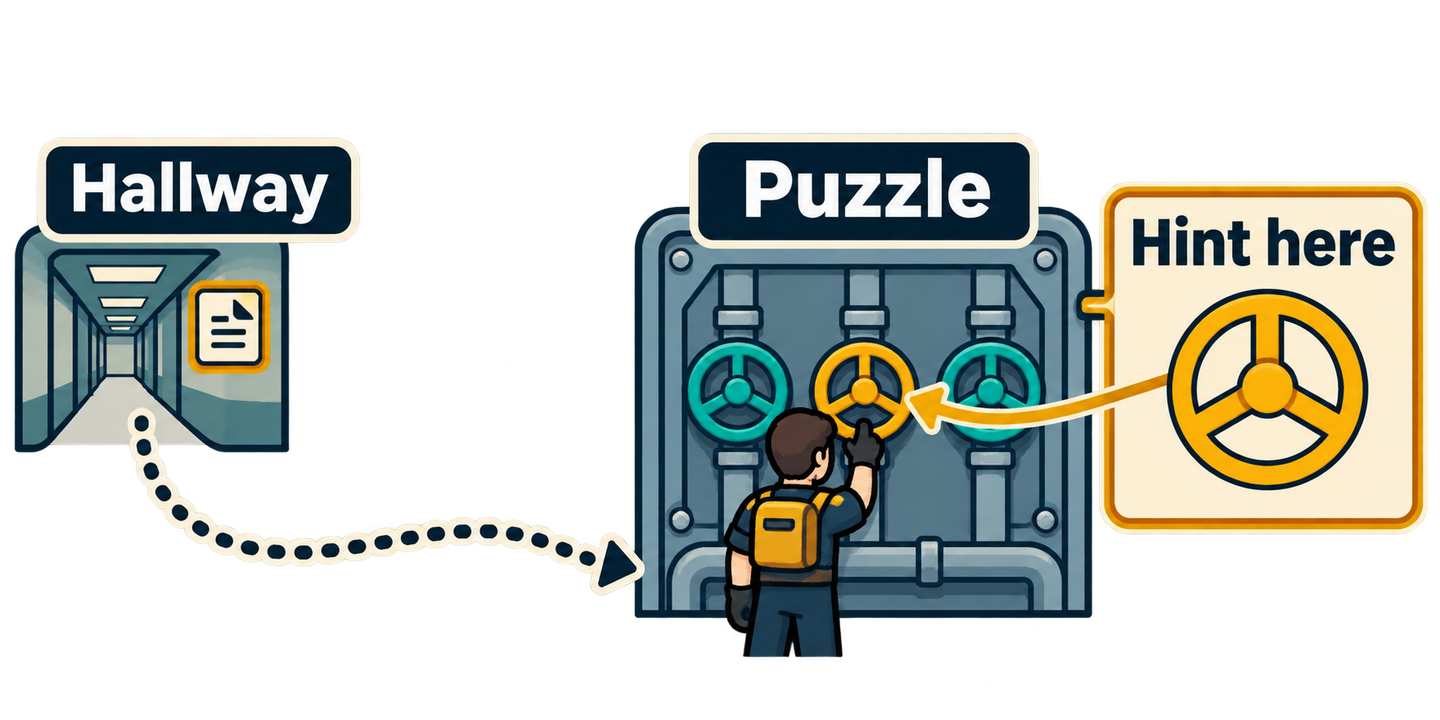
Deliver the hint beside the puzzle
A useful hint can arrive where nobody can use it. Check the trip from requesting help to applying it before adding another delivery device.
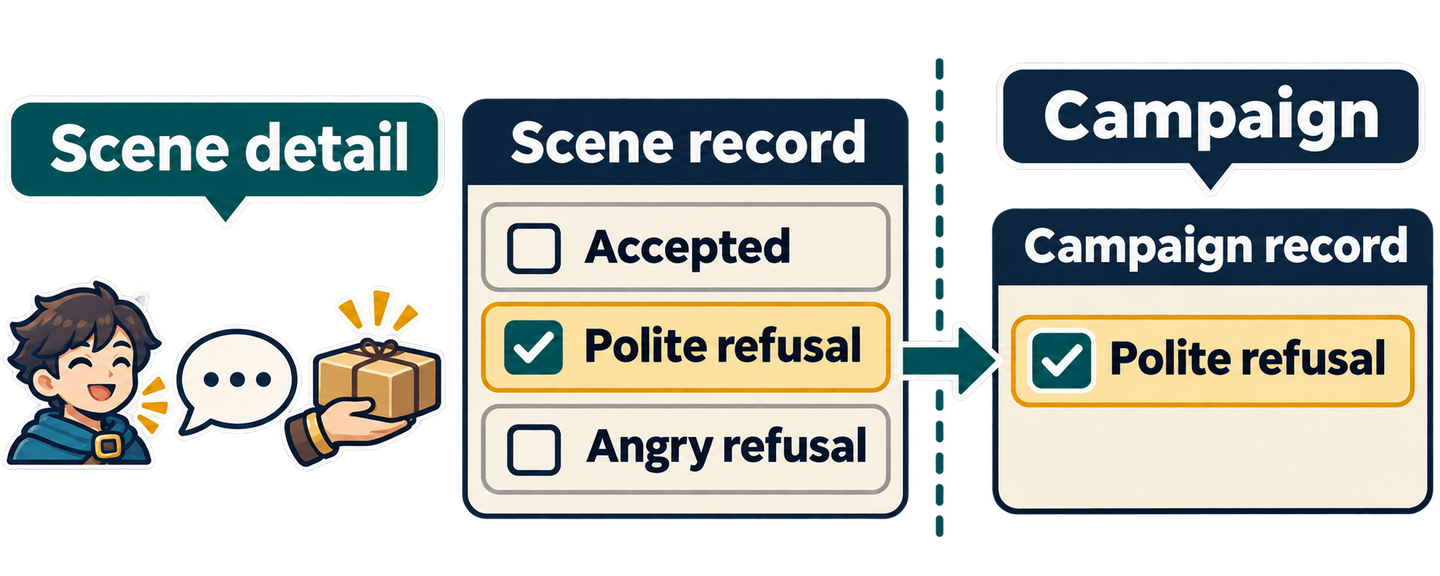
Let a scene end without carrying every gesture
A scene can track small reactions without giving each one permanent authority over a campaign. Decide what the scene commits before carrying its state forward.
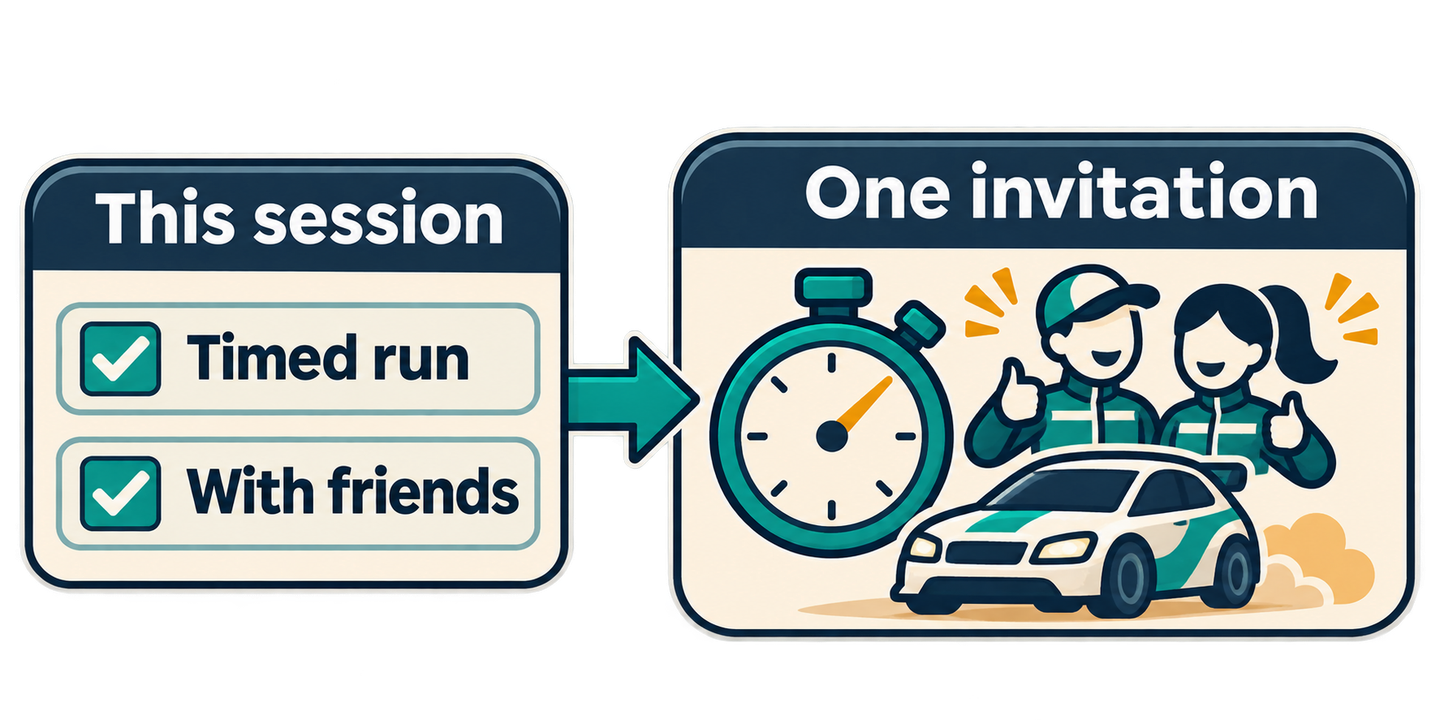
Let a session invitation include two goals
An interest in score does not cancel an interest in friends. Keep compatible session requests available before assigning players to exclusive categories.
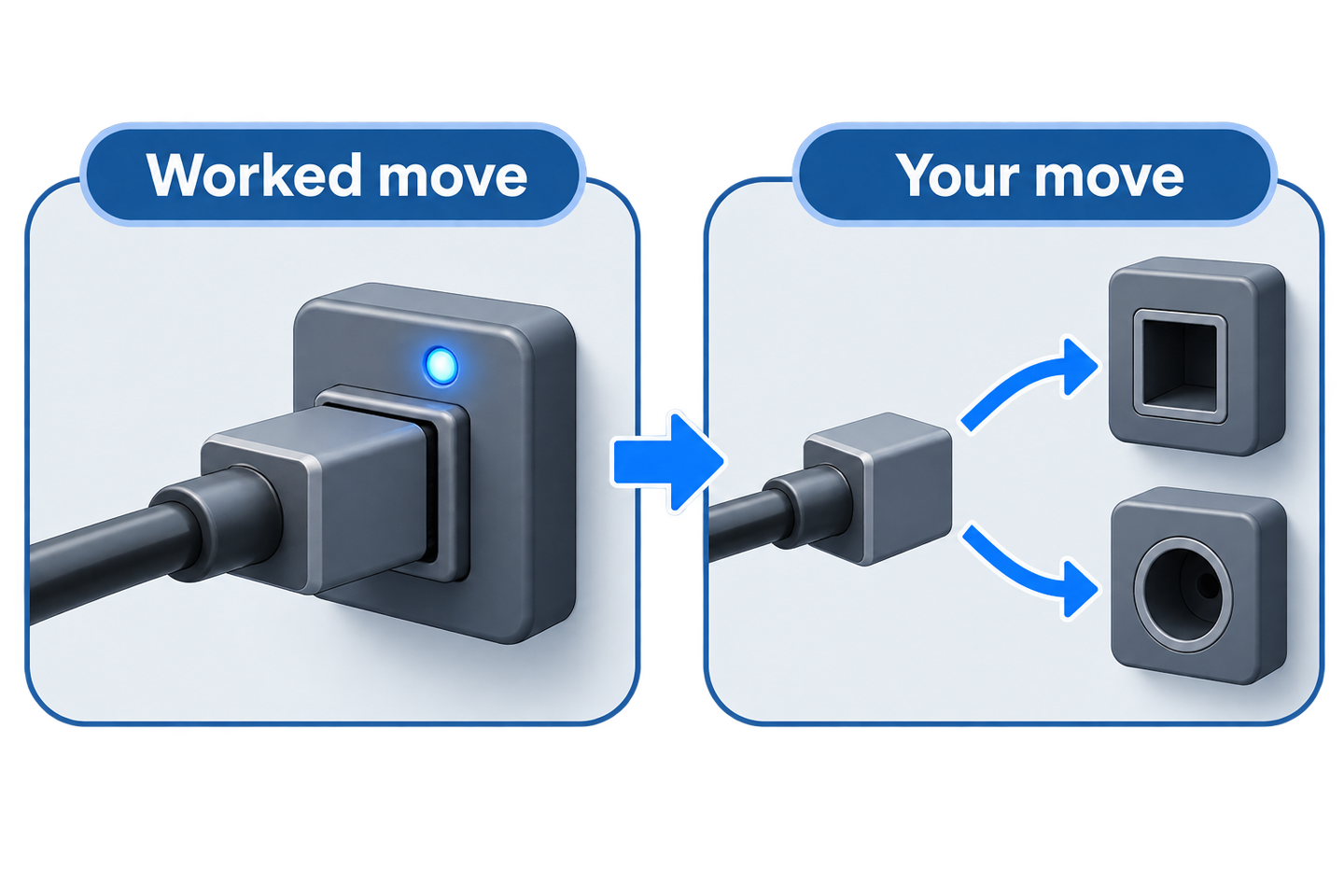
Show one worked move before the next decision
A tutorial example can explain a relation without completing the whole puzzle. Decide what the next player action should still require.
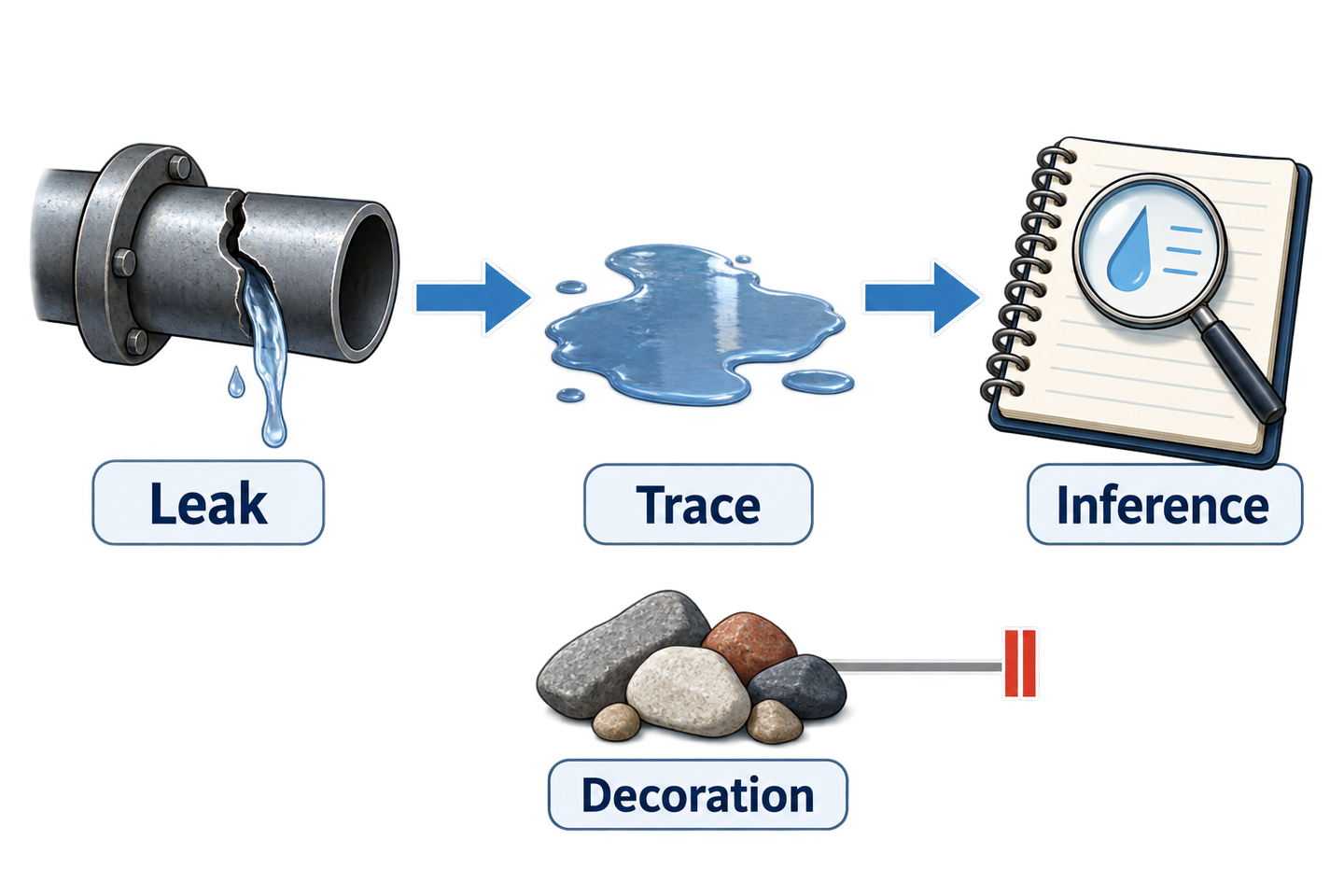
Give generated clues a cause before grading the answer
A mystery can leave room for interpretation while keeping its scored evidence tied to what the generator actually simulated.
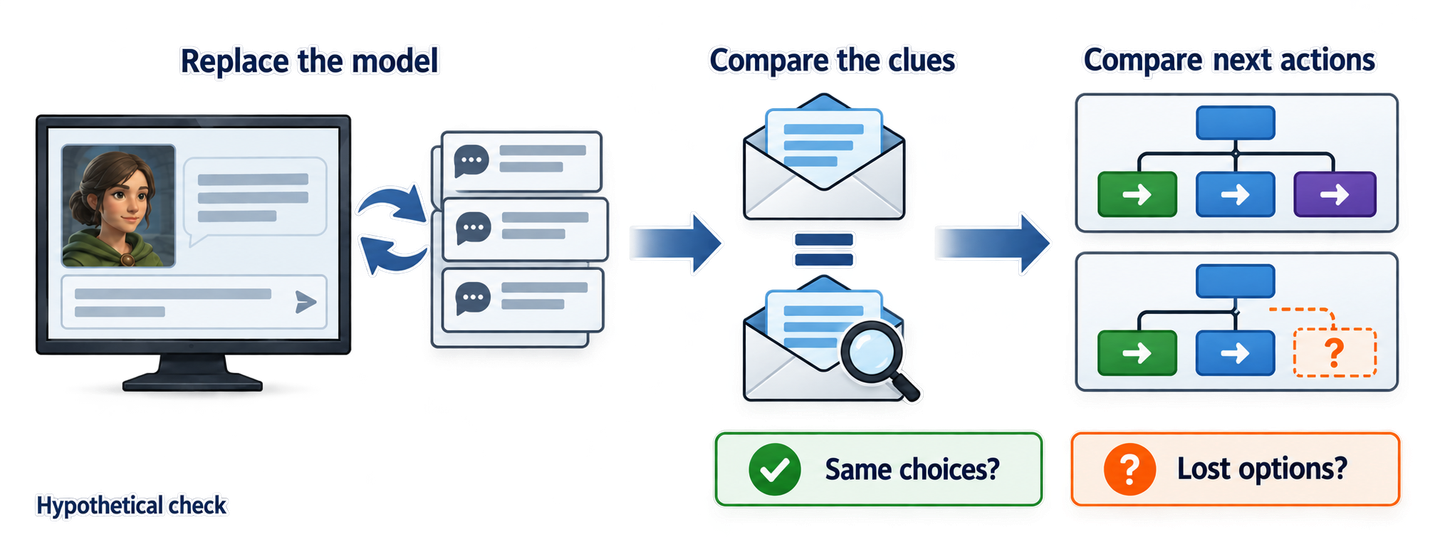
What makes a game AI-native?
Replace the model with written replies and check what changes in play.
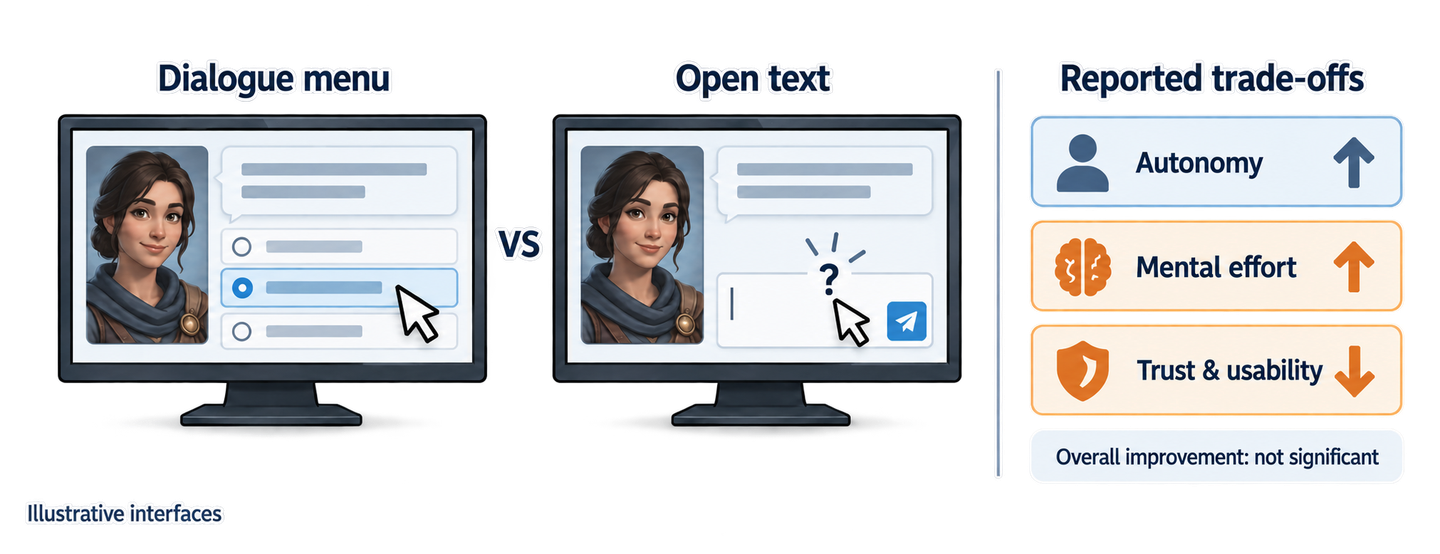
What changes when players can ask an NPC anything?
An LLM-NPC study reports more autonomy alongside more effort and lower trust.
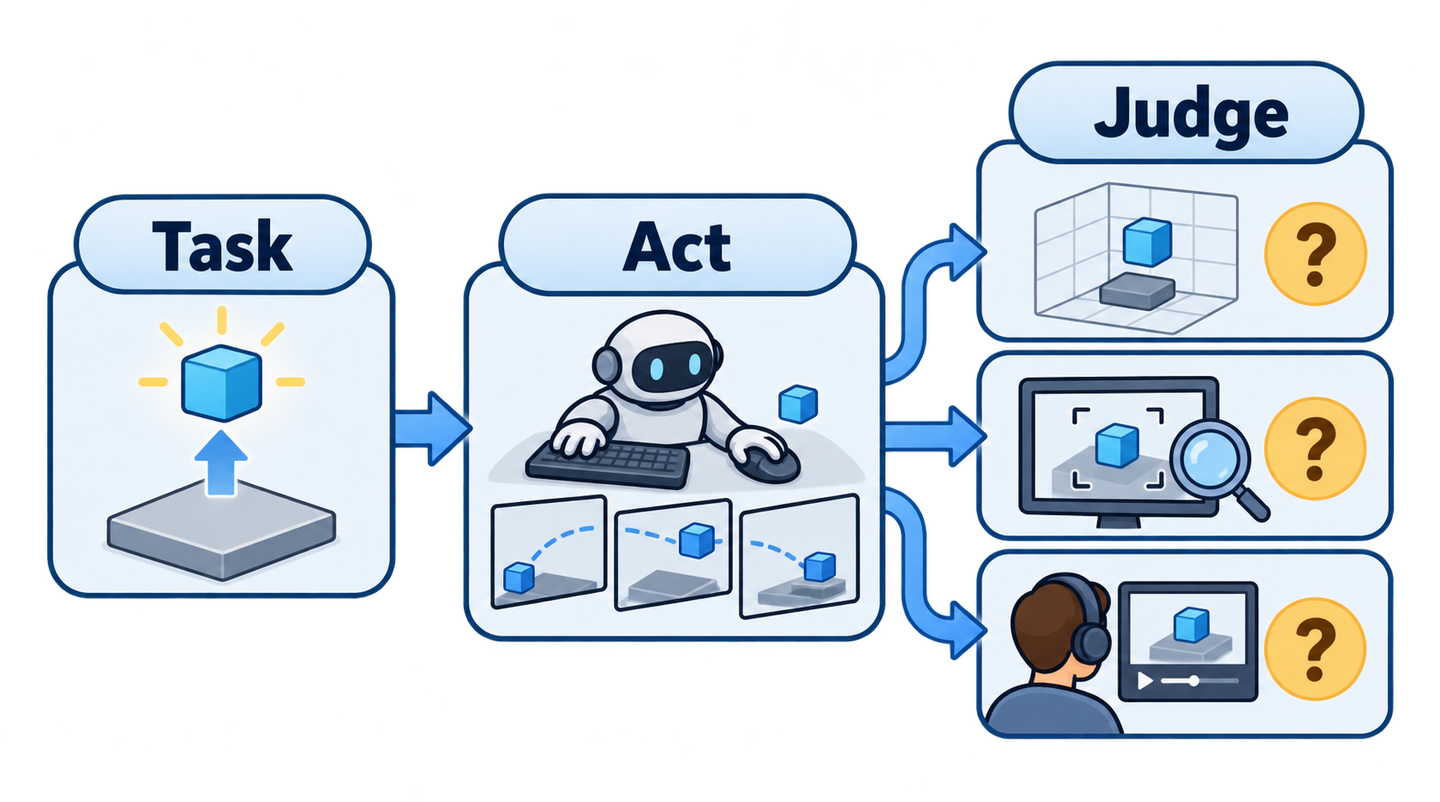
A generalist game agent still needs a definition of task success
Define task consequences and preserve how each agent outcome was judged.
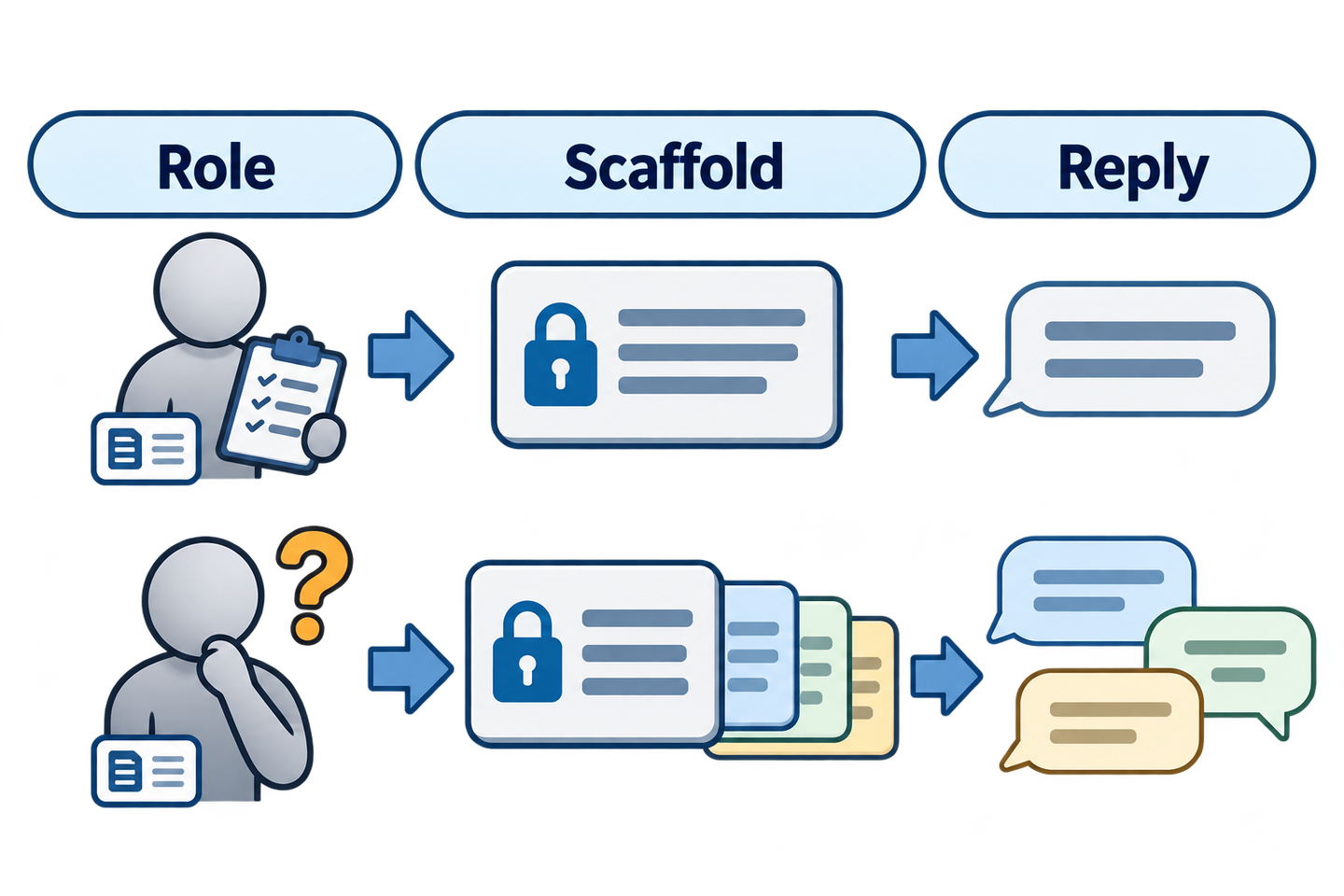
A quest giver and a suspect may need different dialogue constraints
Choose dialogue constraints around the social act each character needs to support.
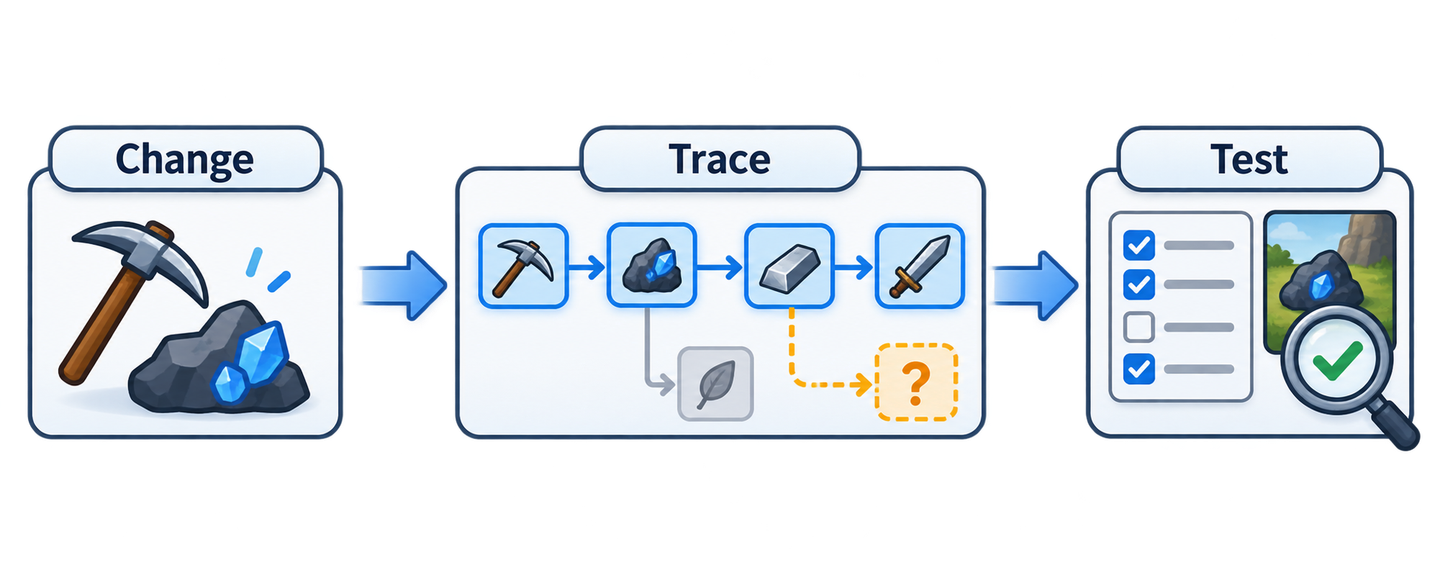
Test the rules that a game update actually touched
Keep an update’s dependency path and observed test consequence together, including missing knowledge.
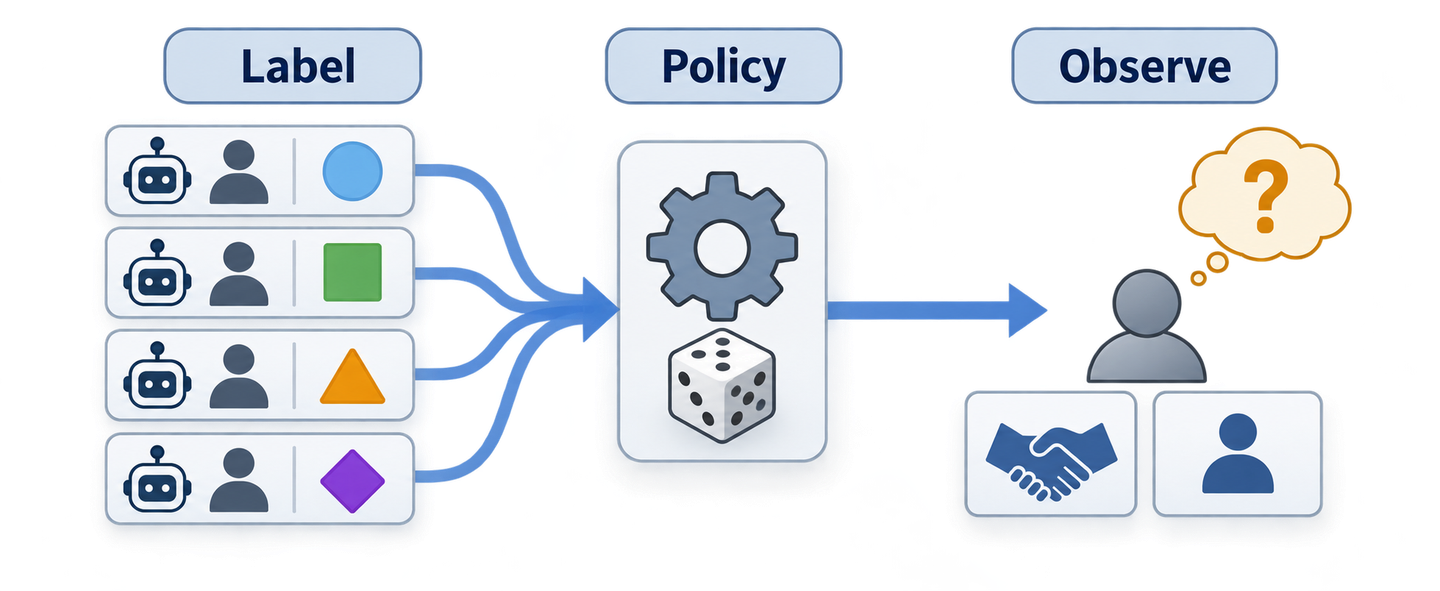
An AI character's identity label can change what a study measures
Record identity presentation alongside behavior before interpreting cooperation with an AI character.
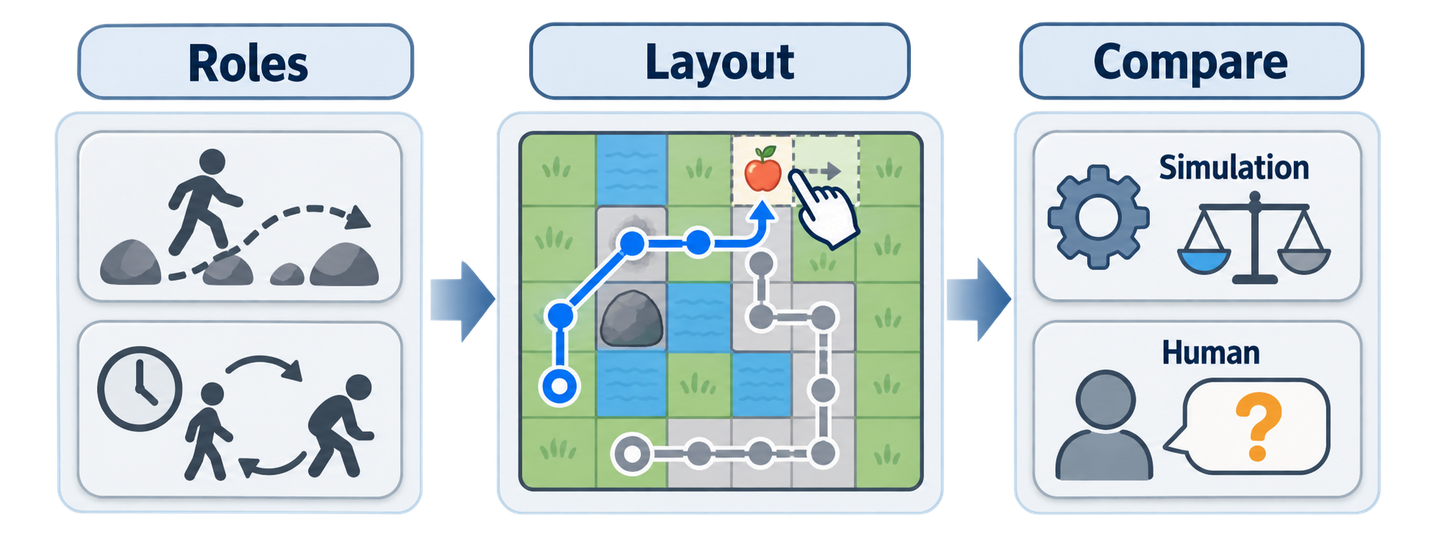
Different action capabilities may need a different level layout
Inspect layout balance under explicit action policies while preserving the separate question of human fairness.
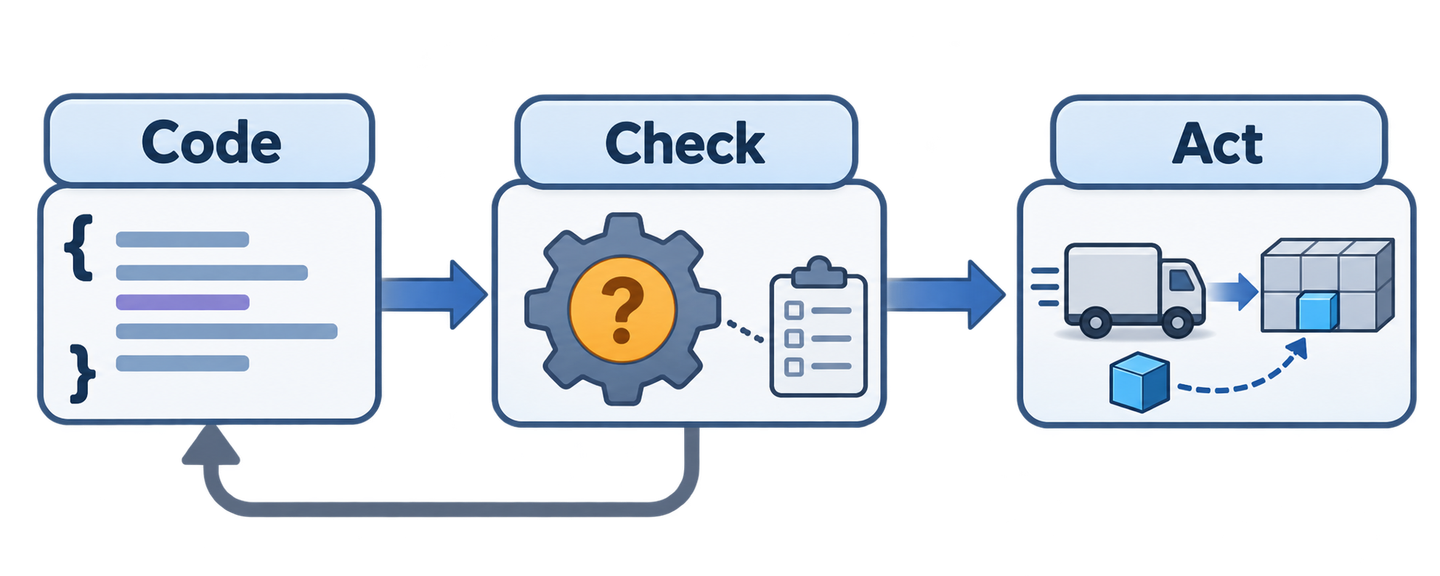
Make a code hint's consequence visible in the game
Inspect code evaluation, explanation and animation separately when designing programming-game feedback.
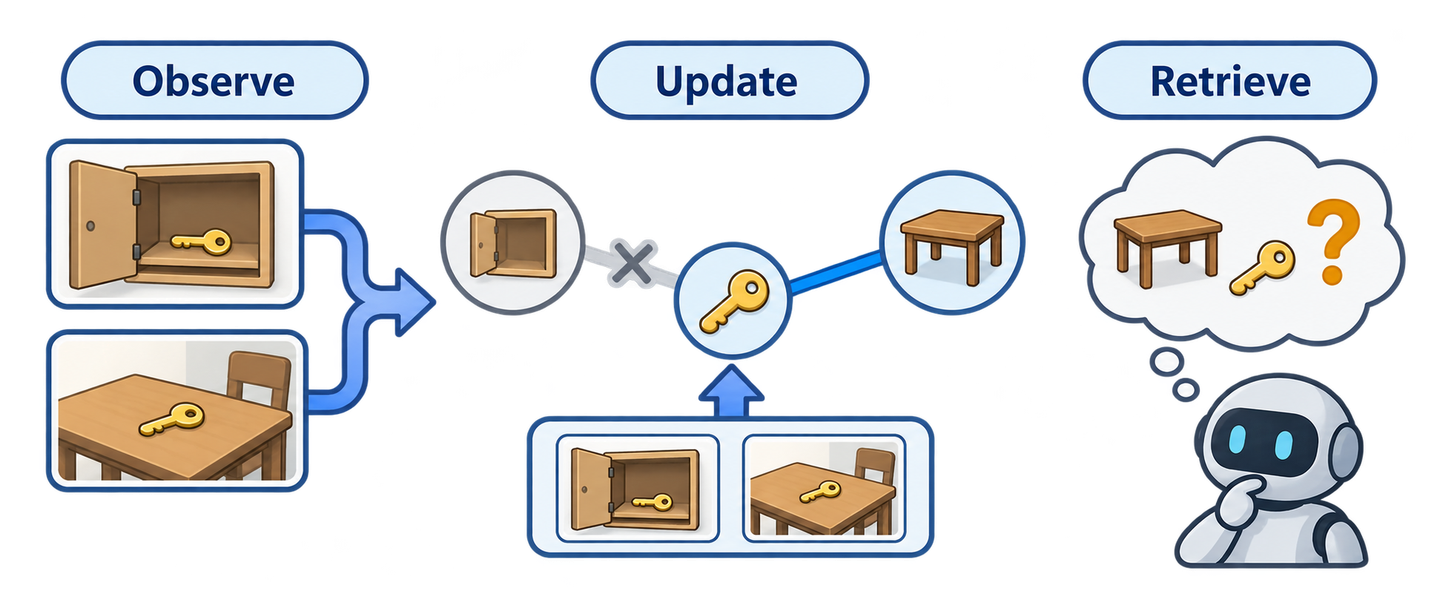
Keep a remembered fact connected to the observation behind it
Trace a remembered relation to its observation and correction before letting it guide a later action.
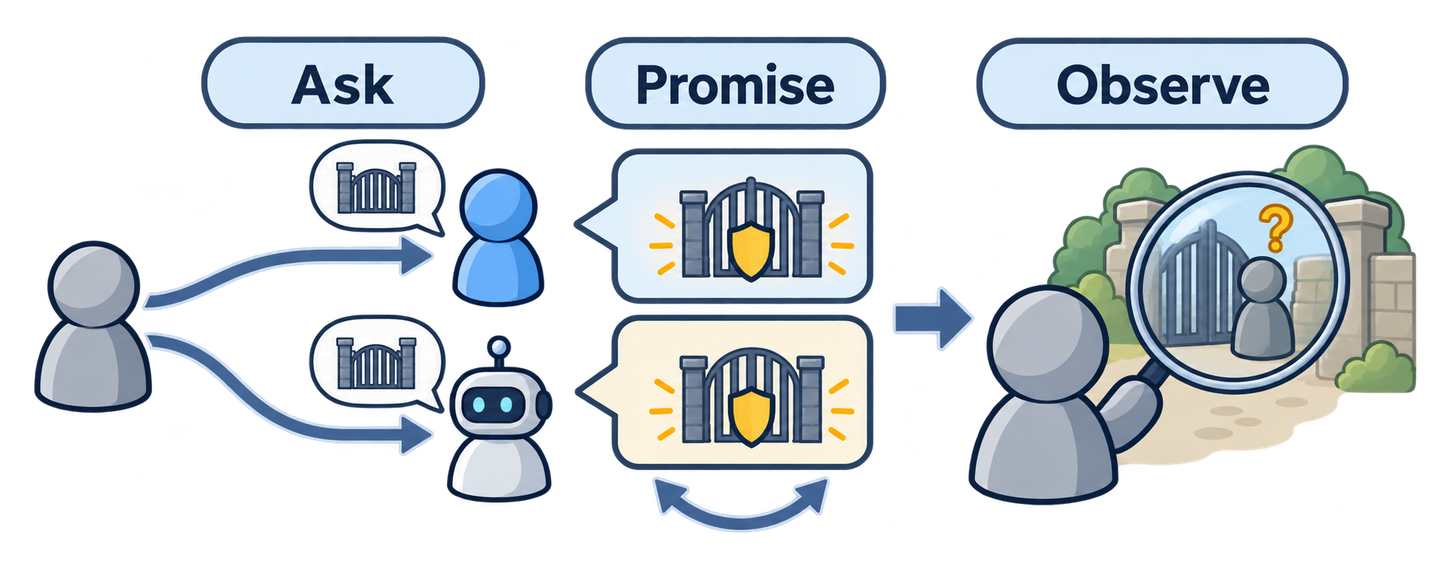
A partner's promises and behavior shape whom players trust
Keep a companion’s identity, promise and follow-through distinguishable when designing a social choice.
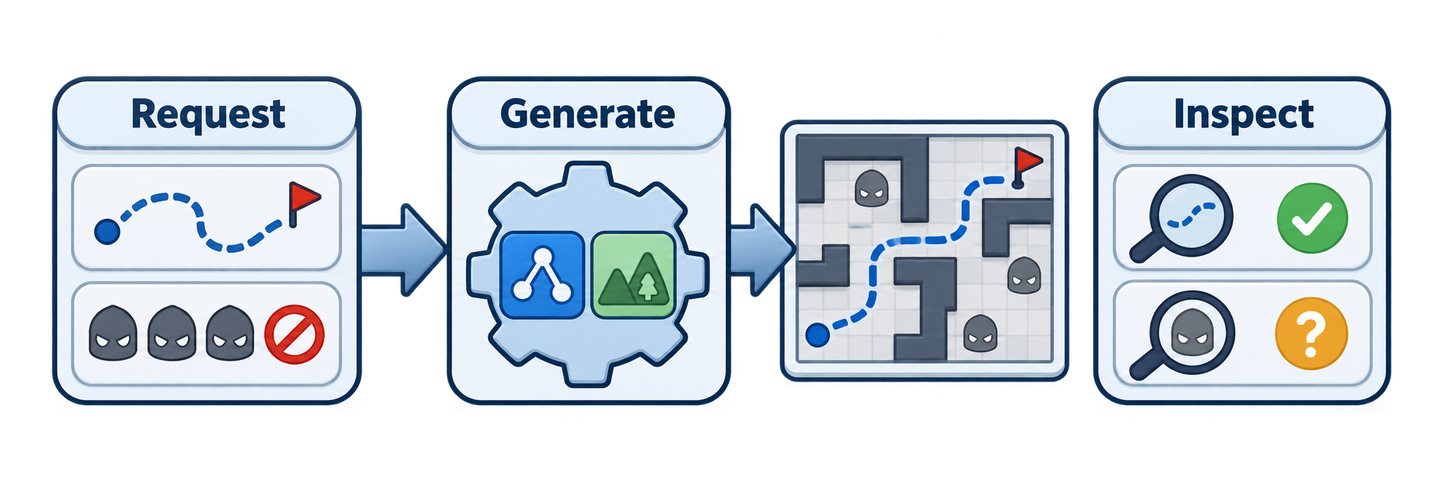
A level request can contain several constraints at once
Retain separately inspectable objectives when a level request combines several properties.
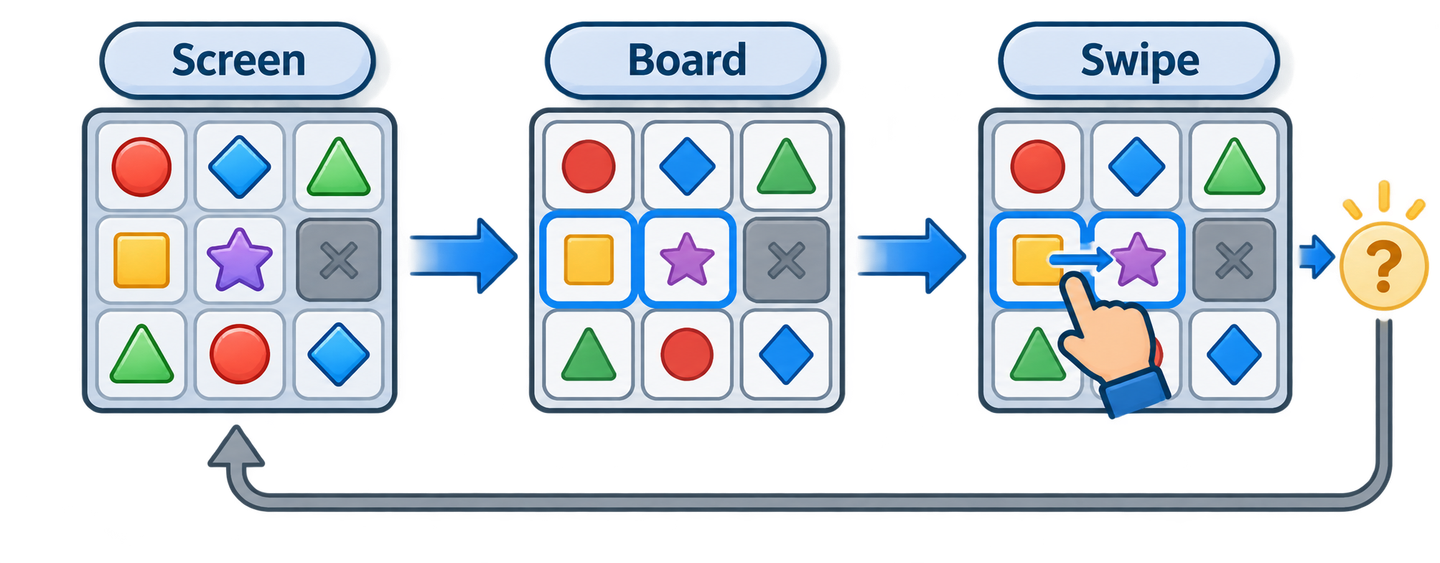
Turn a match-3 board into something a test agent can act on
Keep screenshots, structured boards, chosen moves and actual inputs together when evaluating test agents.
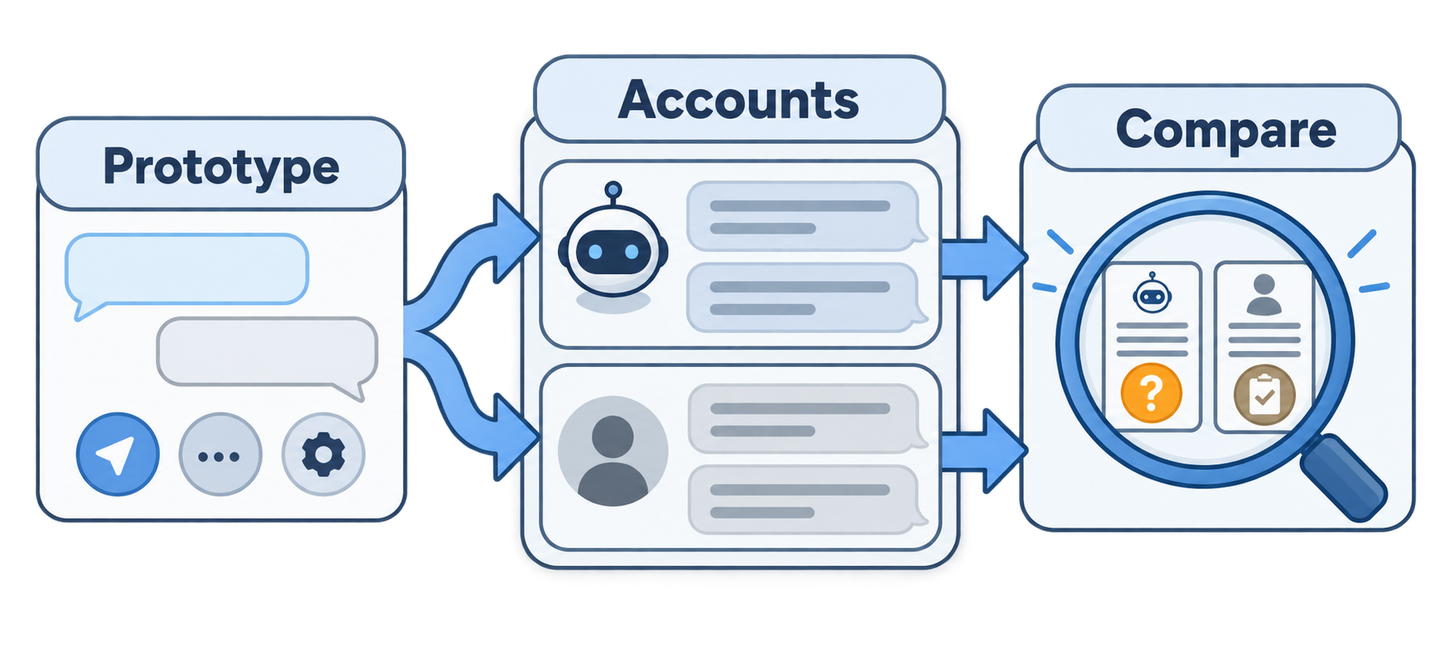
What simulated player feedback can contribute to a prototype
Use simulated critiques as inspectable research aids while preserving the origin of every account.
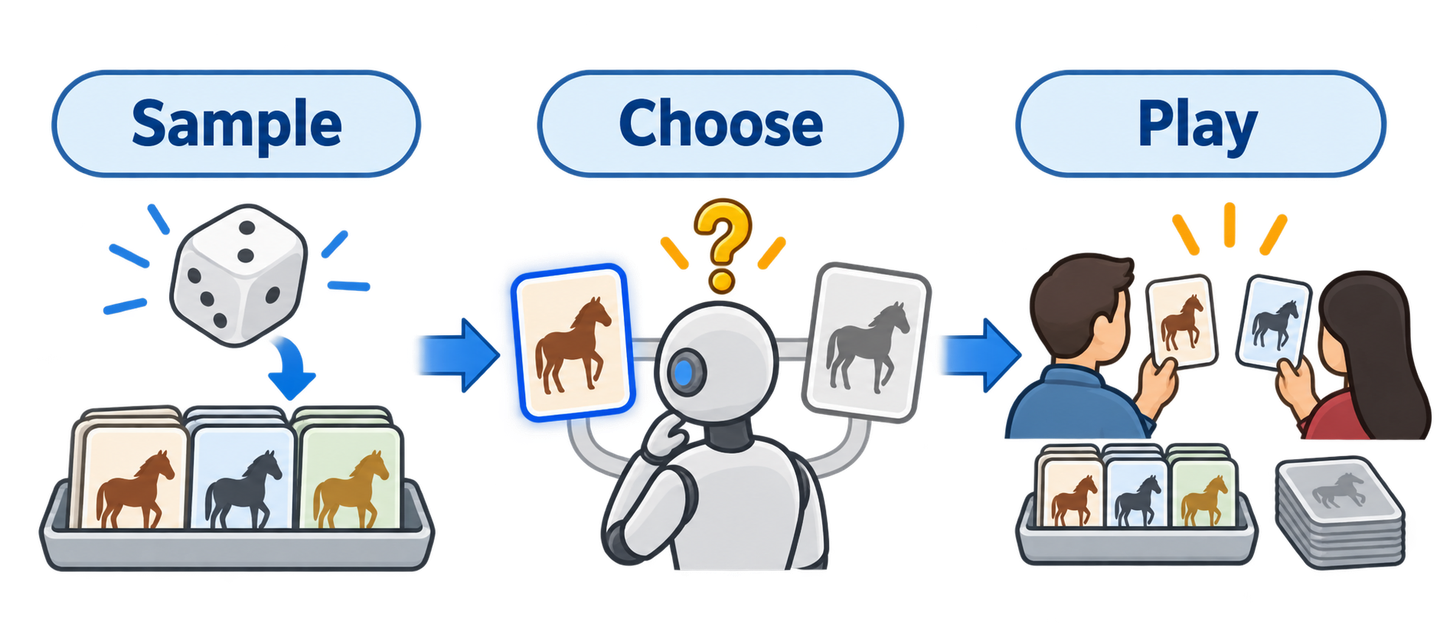
An unpredictable move needs a reason to be random
Separate access to a random sample from the decision to use it in a competitive move.
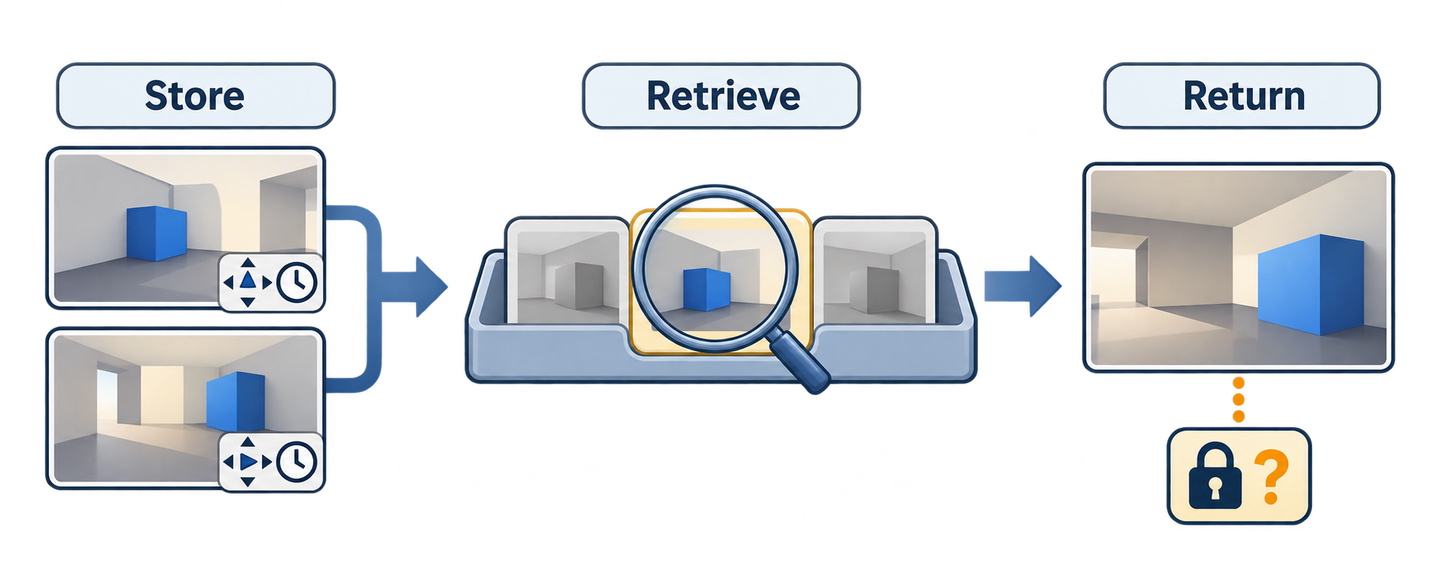
Remember a generated place across a change of view
Inspect which remembered views preserve a revisit and which consequences need authoritative game state.
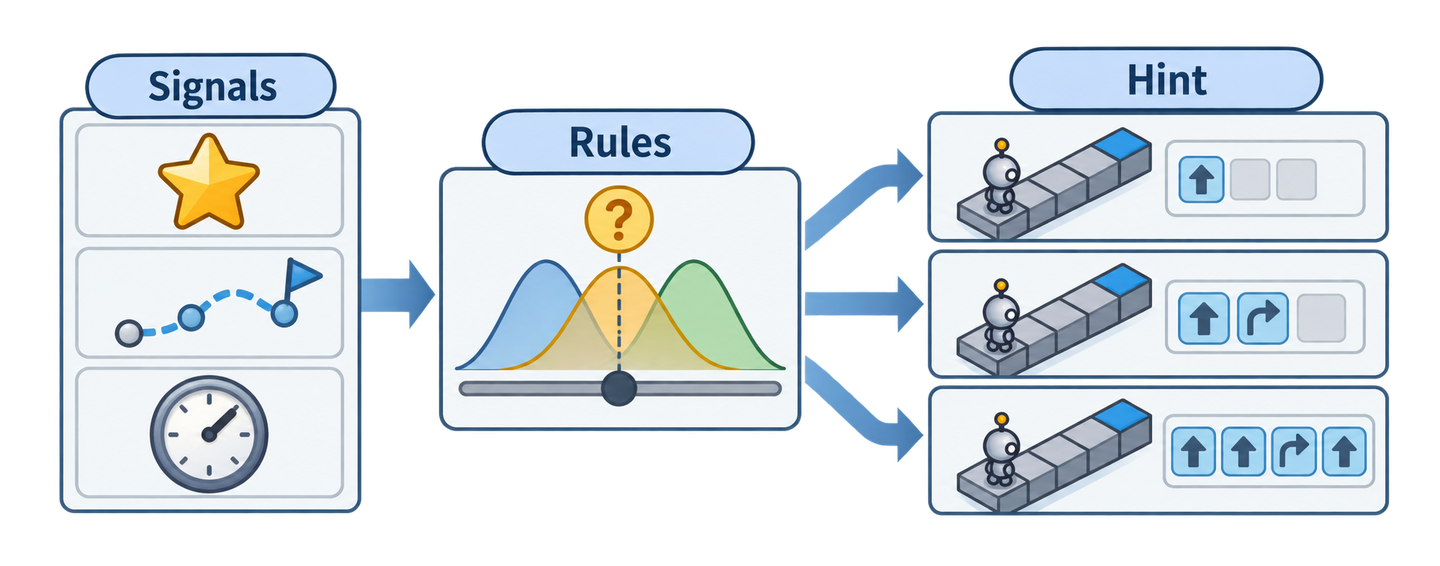
Vary a hint without deciding who the player is
Inspect how performance signals select assistance without treating an inferred expertise label as a person’s identity.
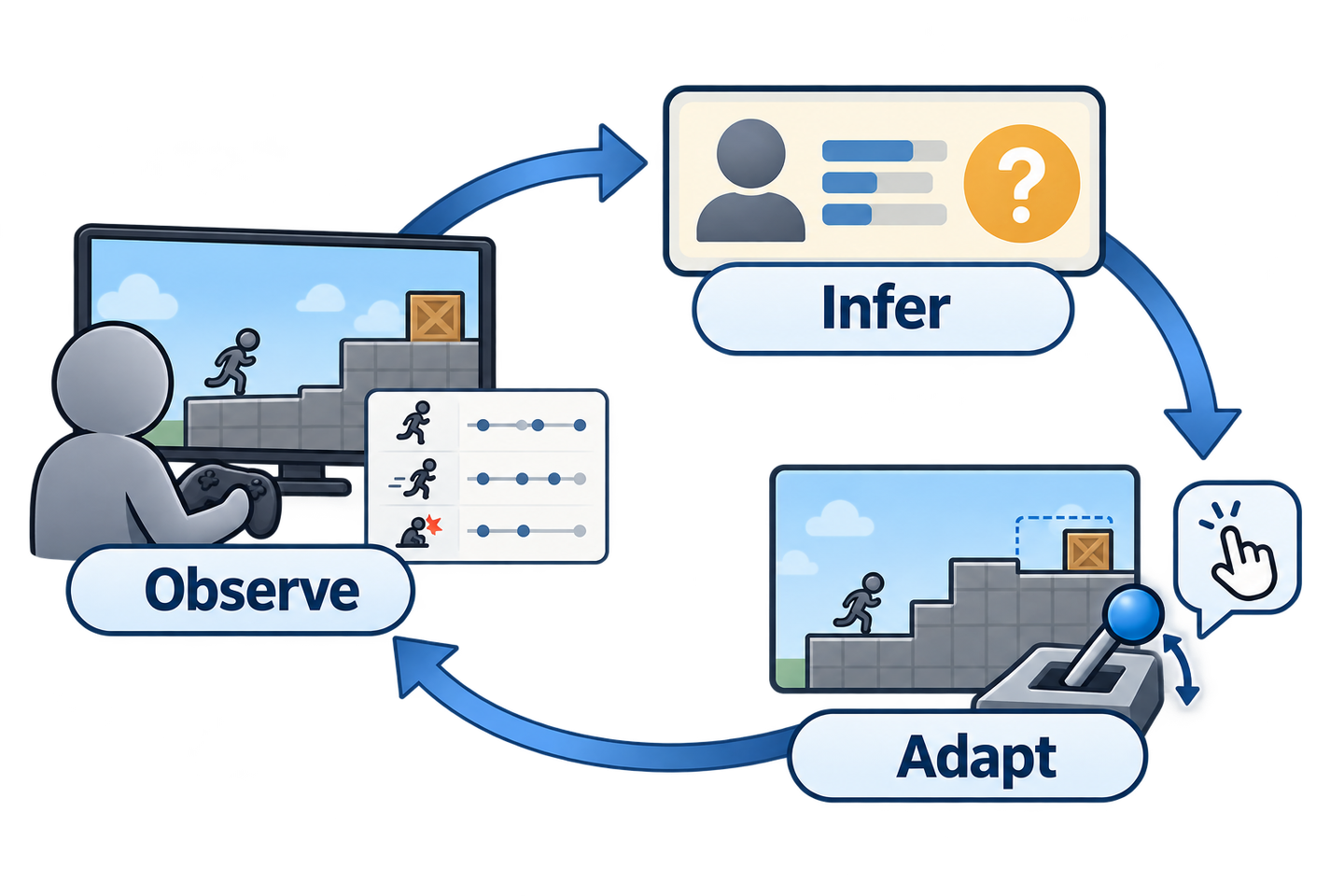
Close the loop between player evidence and game adaptation
Trace observations into an adaptation and inspect the consequences before expanding a player model.
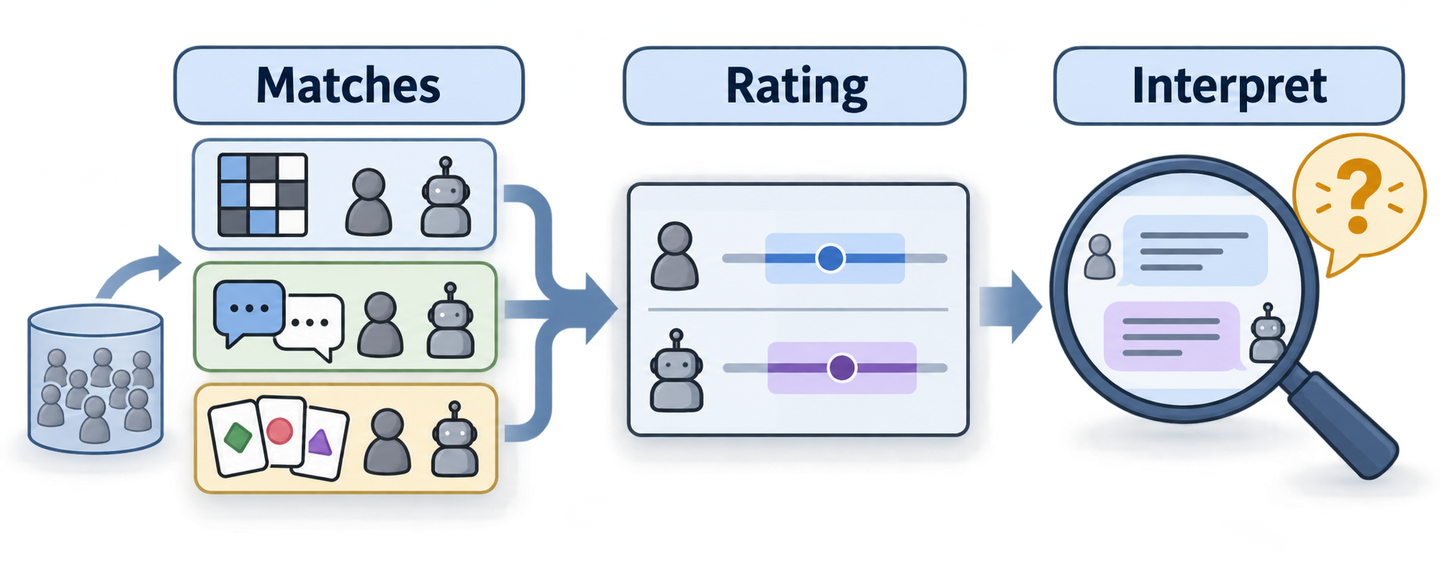
Reading a game-agent leaderboard
Read the games, opponents and uncertainty behind a rating before choosing a game agent.
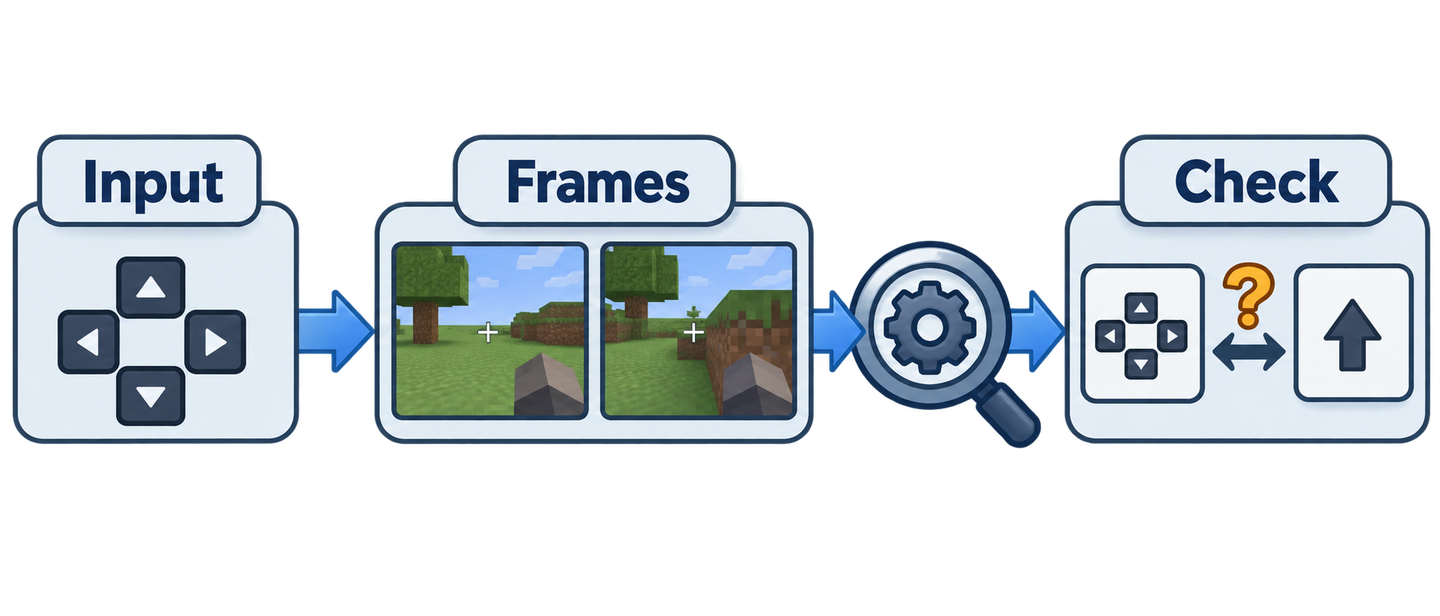
Check whether a generated world follows the action it receives
Evaluate action alignment, image quality and response time as separate promises.
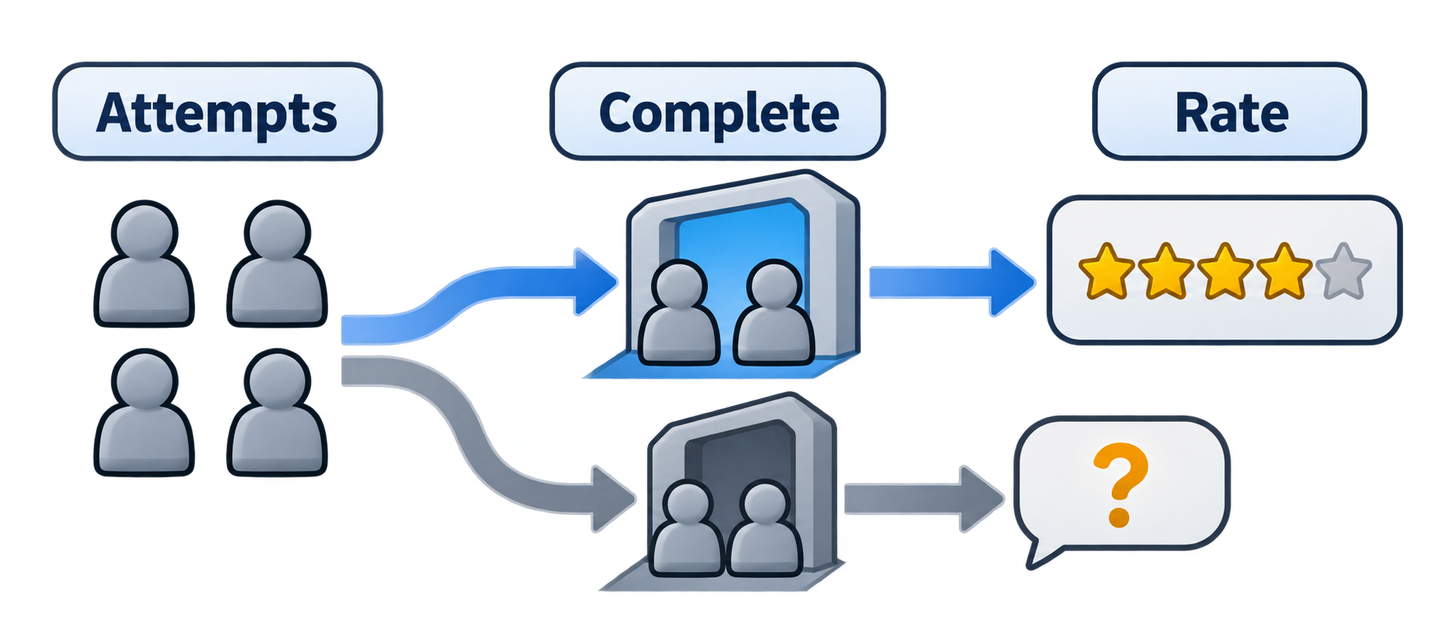
More completed levels can come with lower player ratings
Keep completion and reported experience separate when evaluating personalized levels.
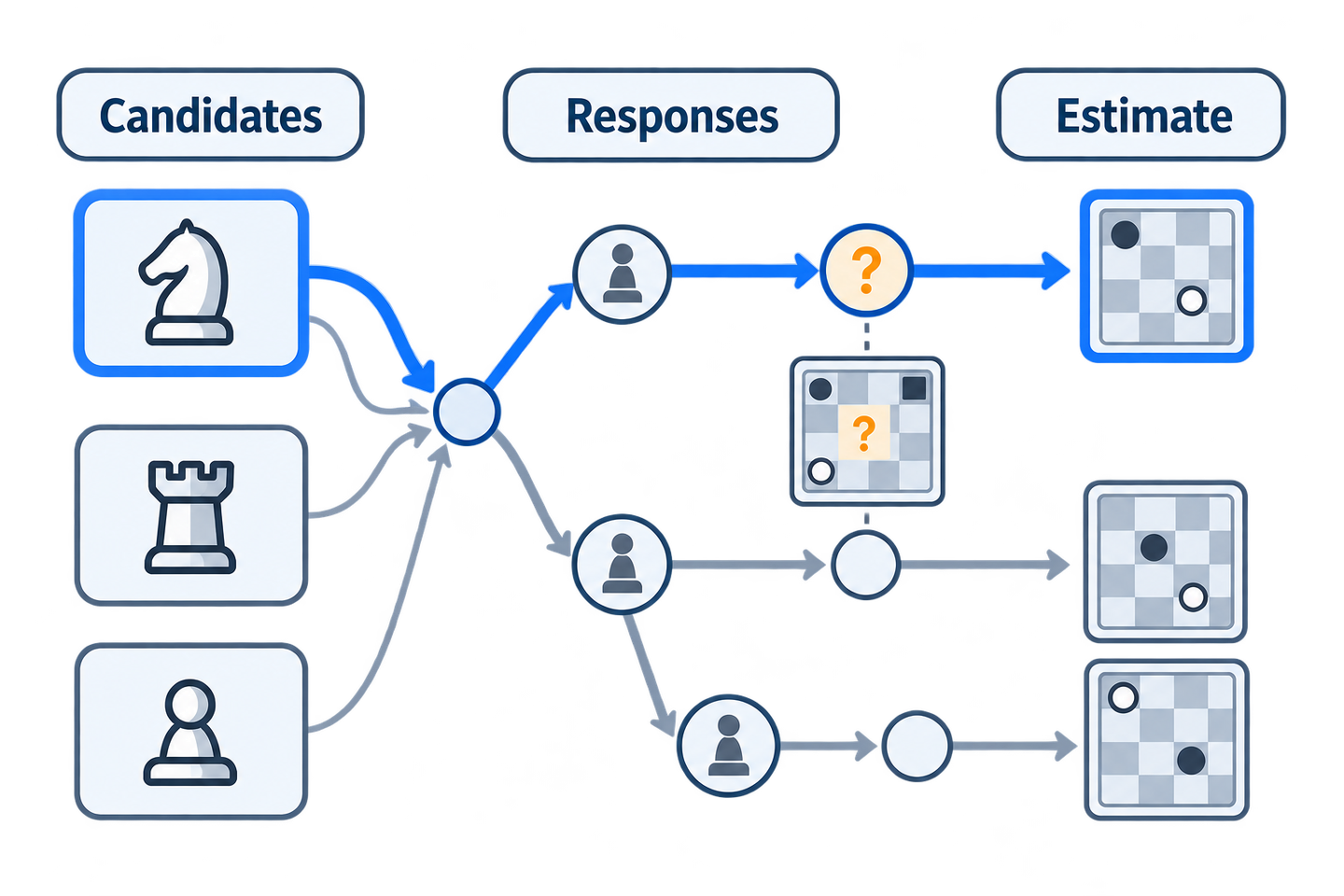
Give a competitive agent a search tree to reason through
Inspect which candidate, response or estimate changes a competitive agent’s chosen move.
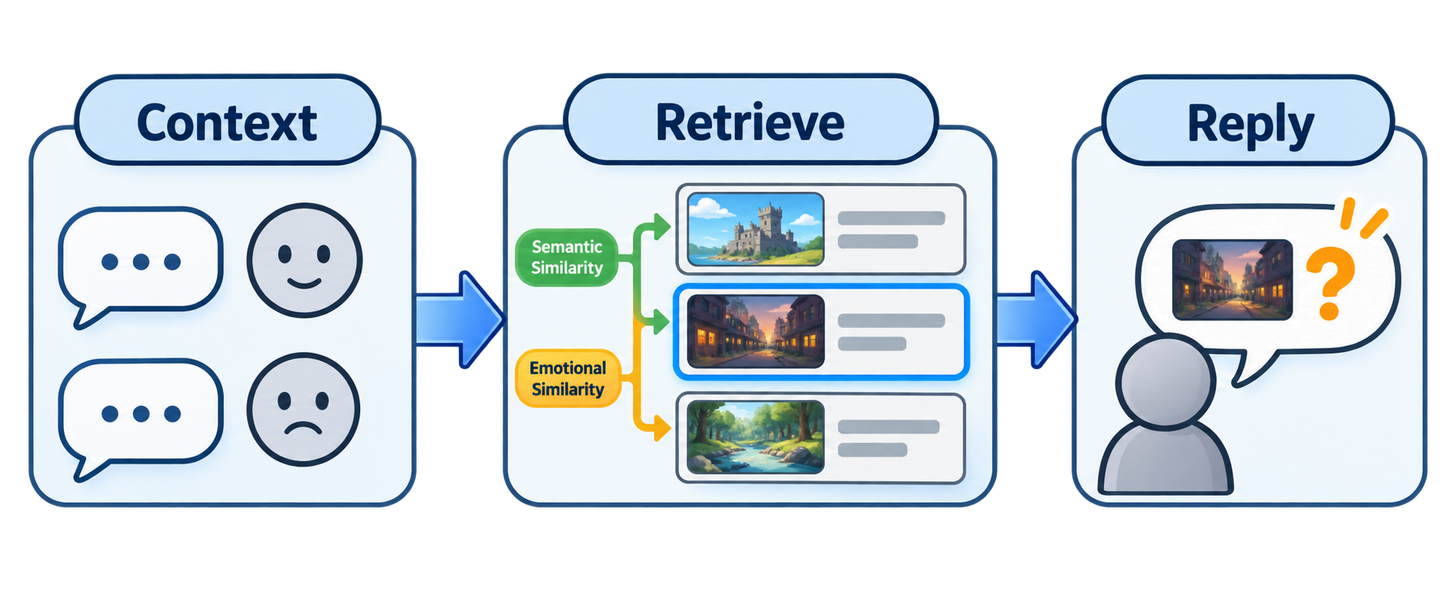
Which memory should a character recall in this emotional context?
Inspect which records emotional retrieval selects before judging whether a character’s reply keeps the game’s commitments.
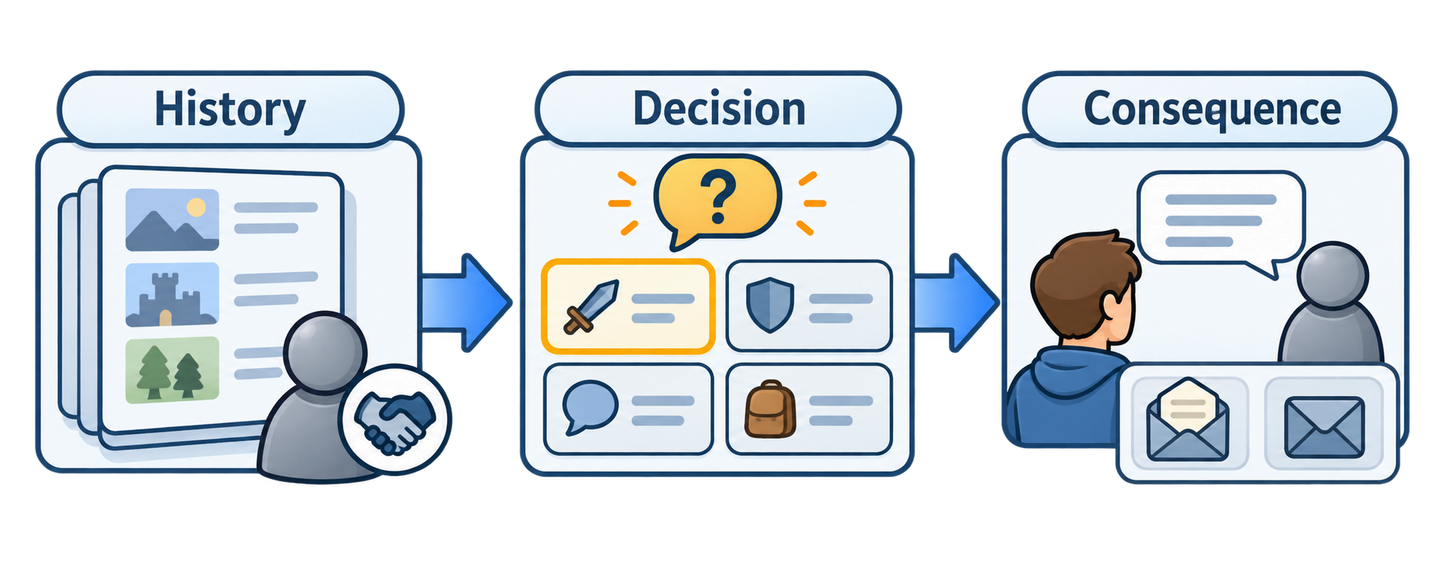
A believable voice does not specify a character's next decision
Inspect a character’s choices against relevant history before evaluating the voice that expresses them.
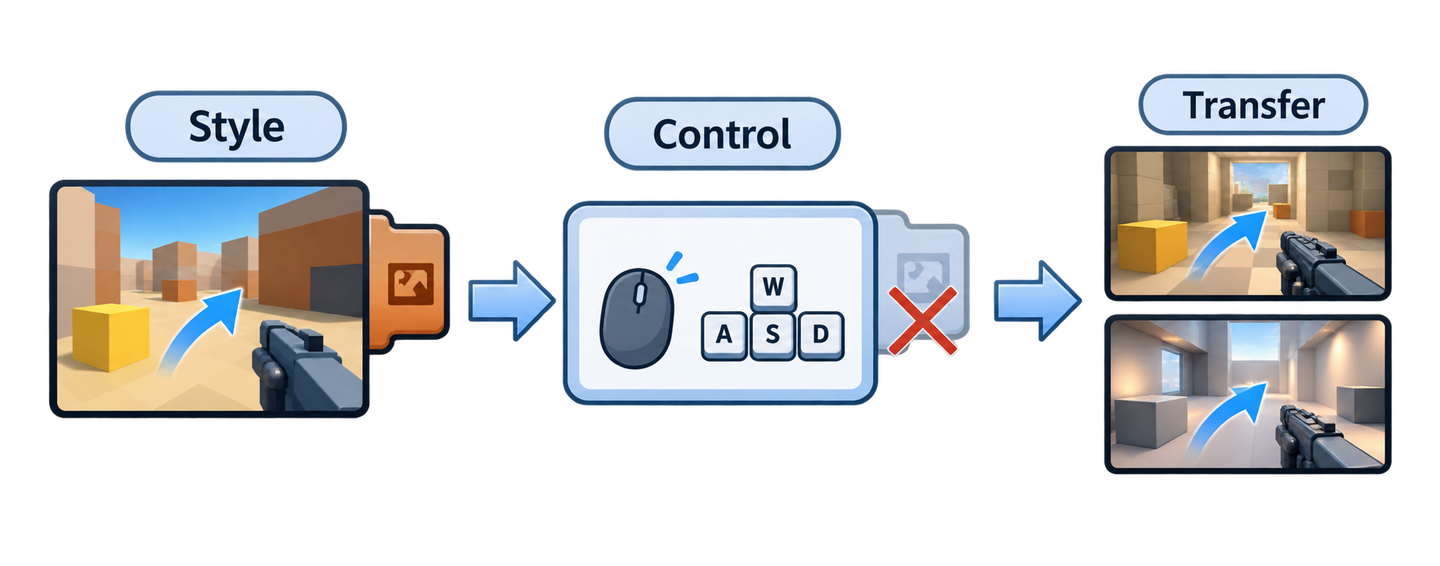
Separating a generated world's appearance from its controls
Compare action meaning across scene styles before treating visual variety as a new playable game.
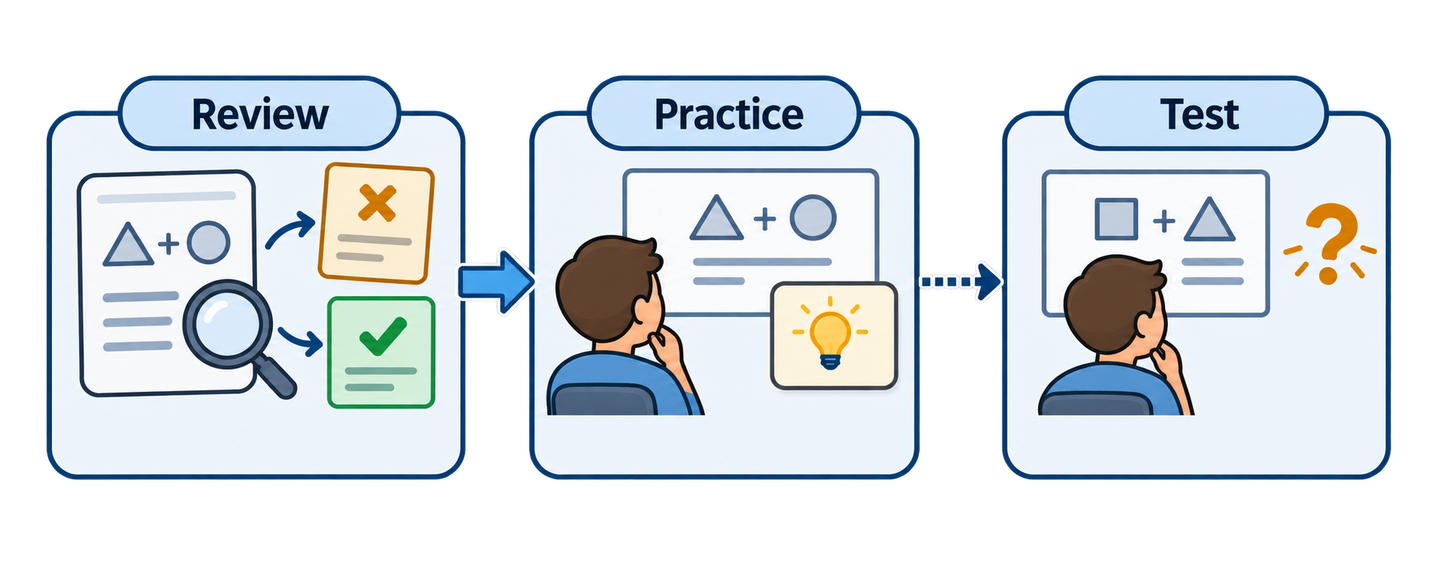
When an AI hint is meant to teach
Check generated help before use and separate supported completion from what a learner can do afterward.
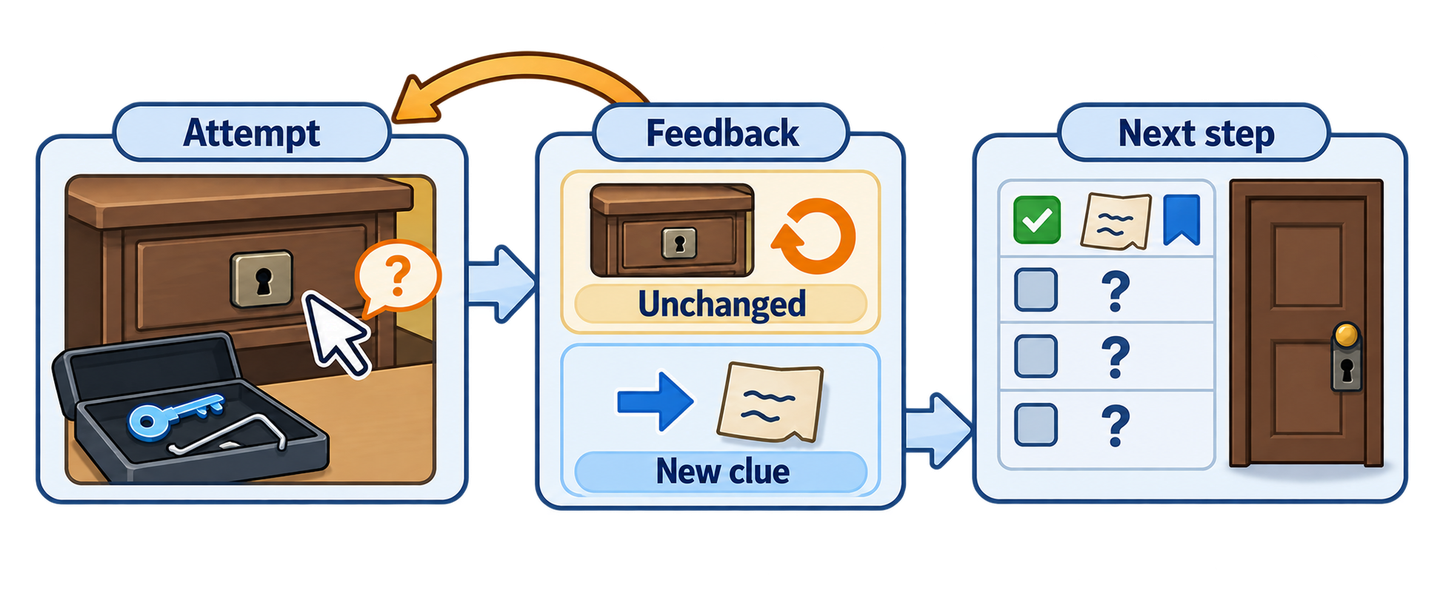
An escape-room agent can take many steps without solving the puzzle
Inspect action feedback and new usable information alongside steps and hints when evaluating puzzle-solving agents.
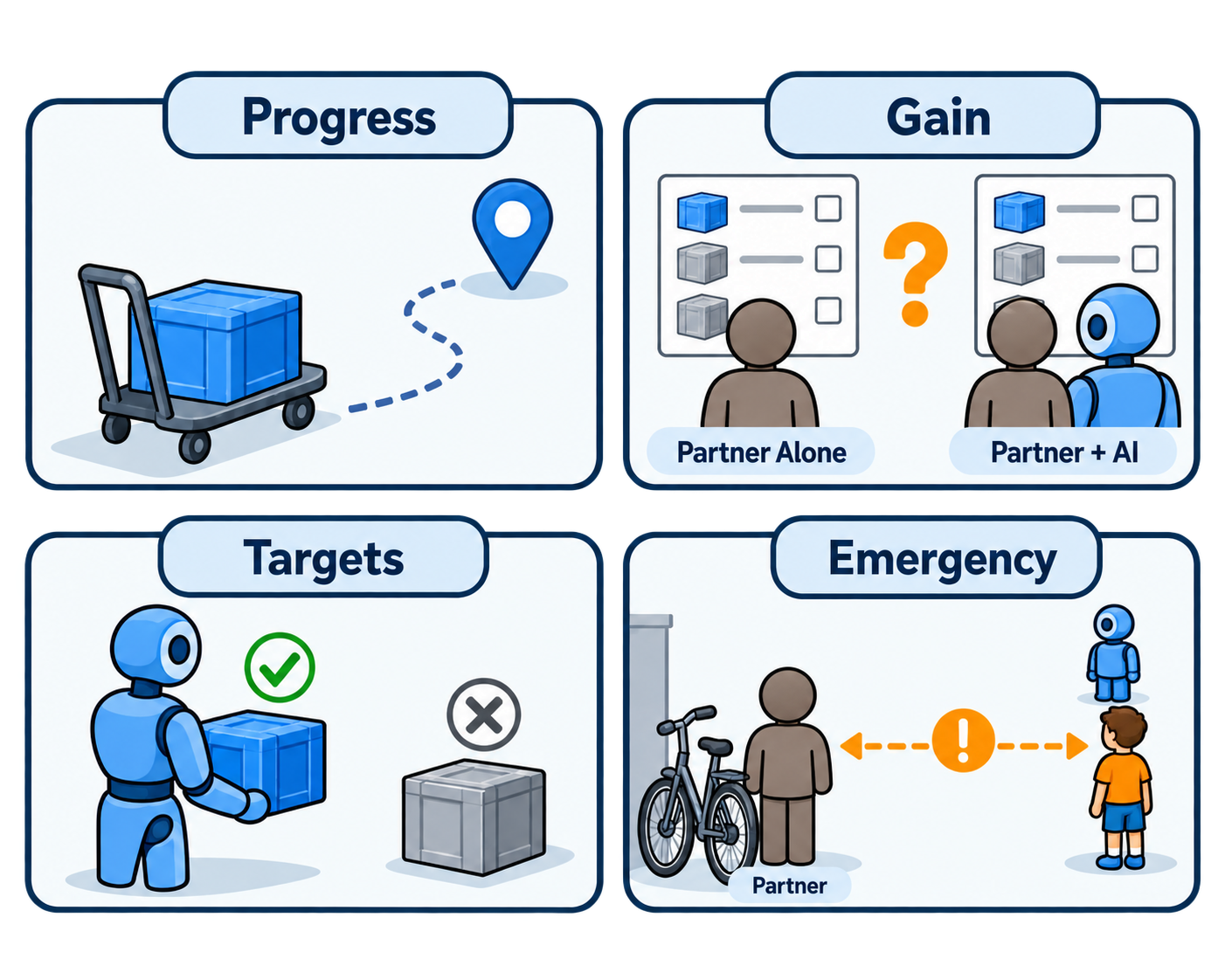
Measure what an AI teammate helps this partner do
Evaluate an AI teammate through the contribution it makes, including goal-selection errors and the partner’s opportunity to participate.
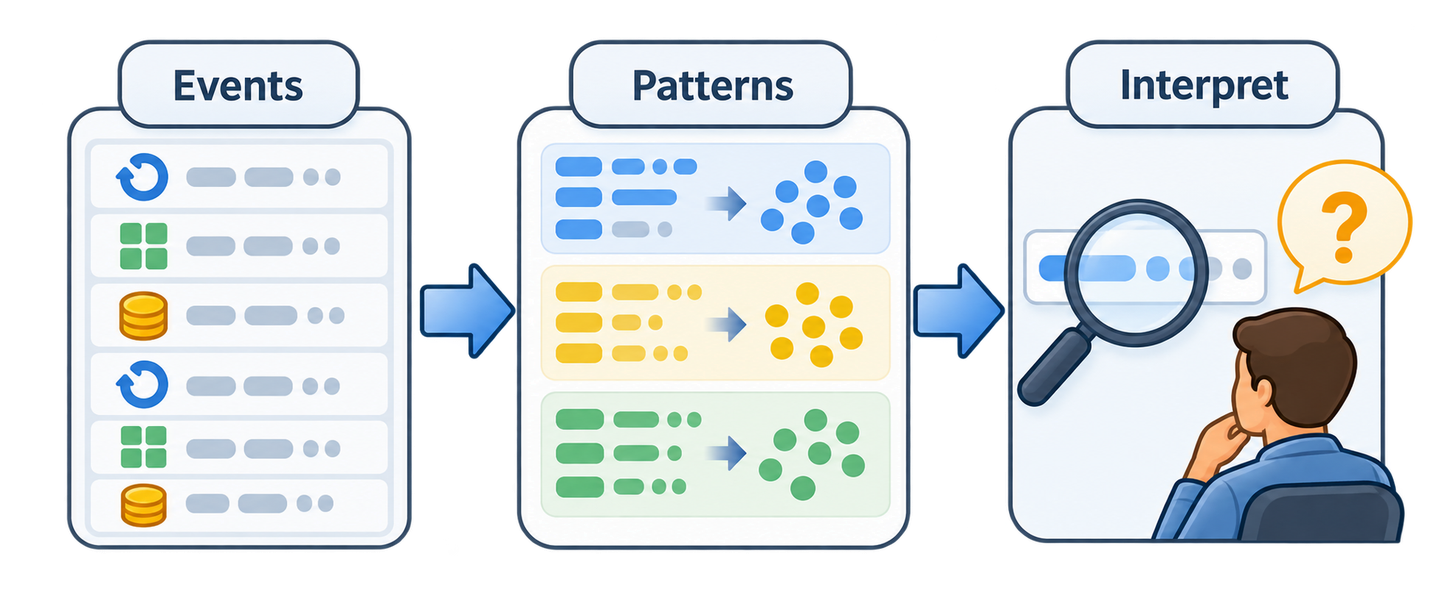
Reading gameplay events as a language
Use learned event patterns to investigate a design question while keeping player labels and intervention decisions open to challenge.
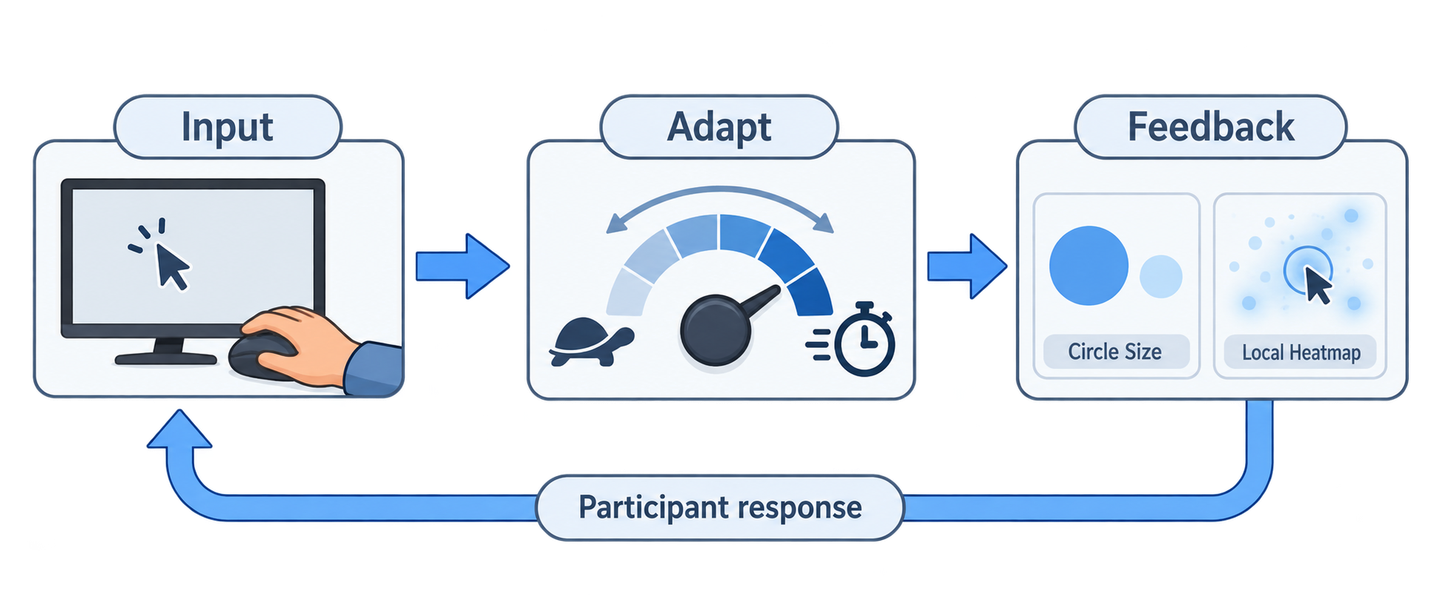
Players adapt to how quickly the AI adapts
Record adaptation speed and displayed feedback before interpreting player behavior as a stable preference.
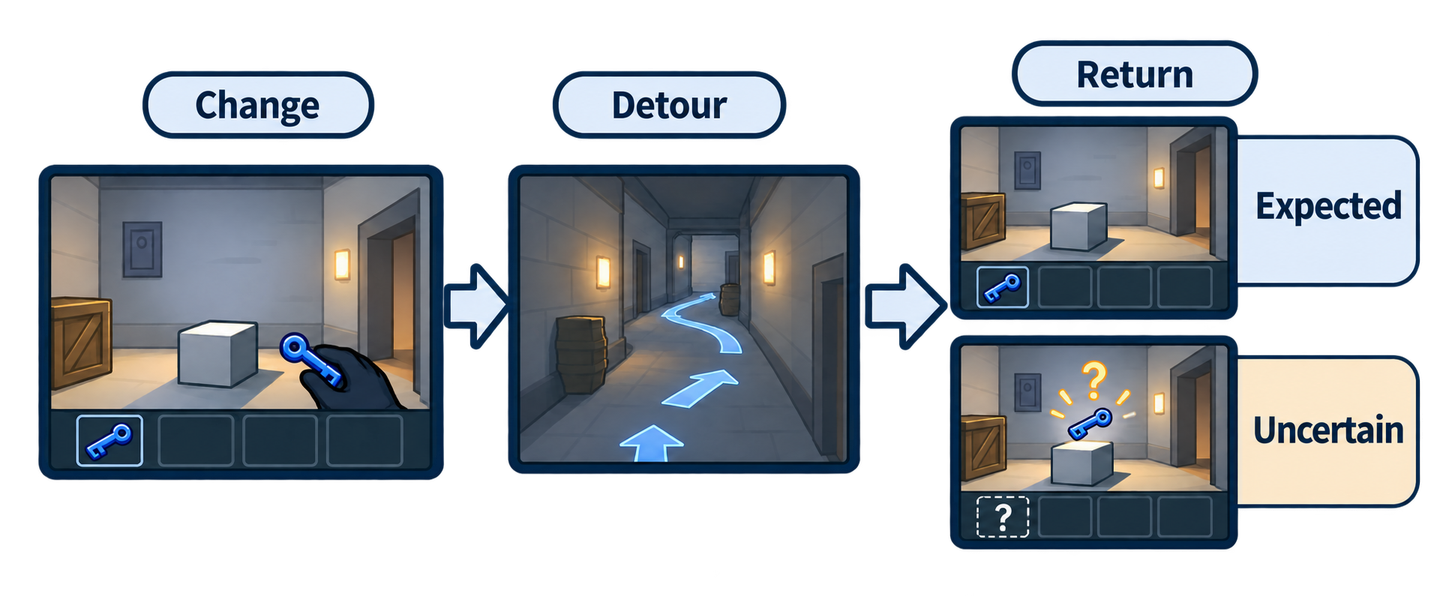
A convincing game clip can still forget the game state
Inspect retained consequences alongside plausible frames when deciding what a learned game simulation can support.
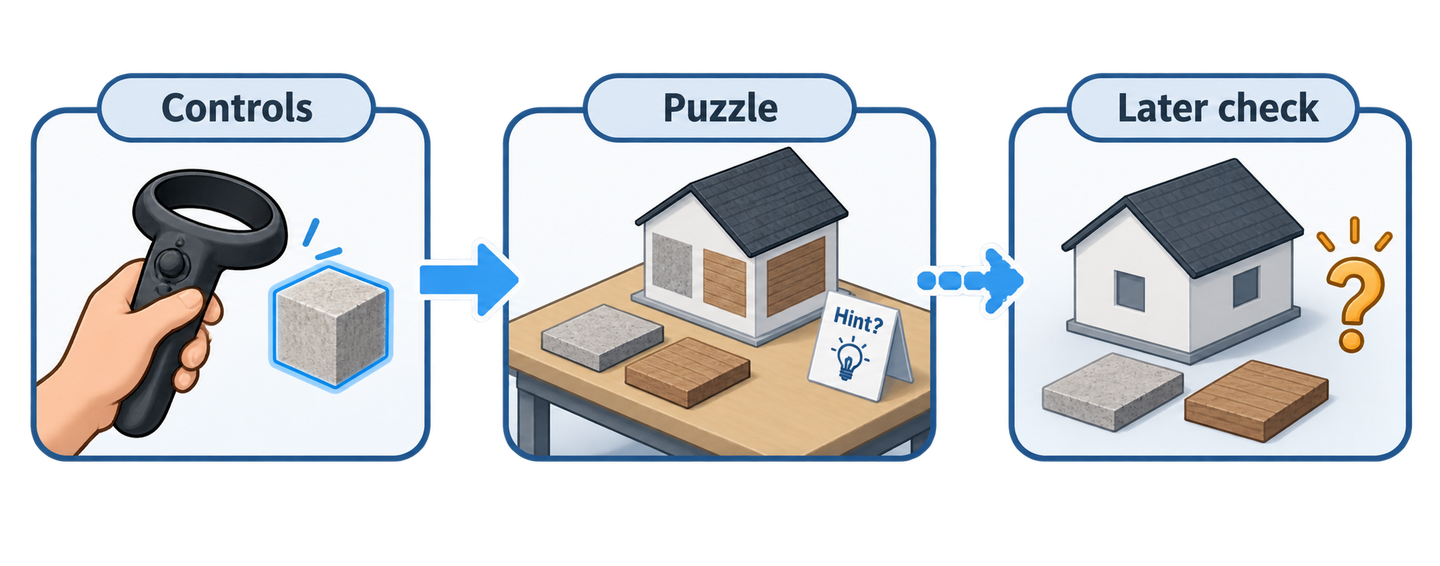
Teach the interface before asking the player to solve the puzzle
Separate interface help, puzzle reasoning and later learning evidence when designing educational game assistance.
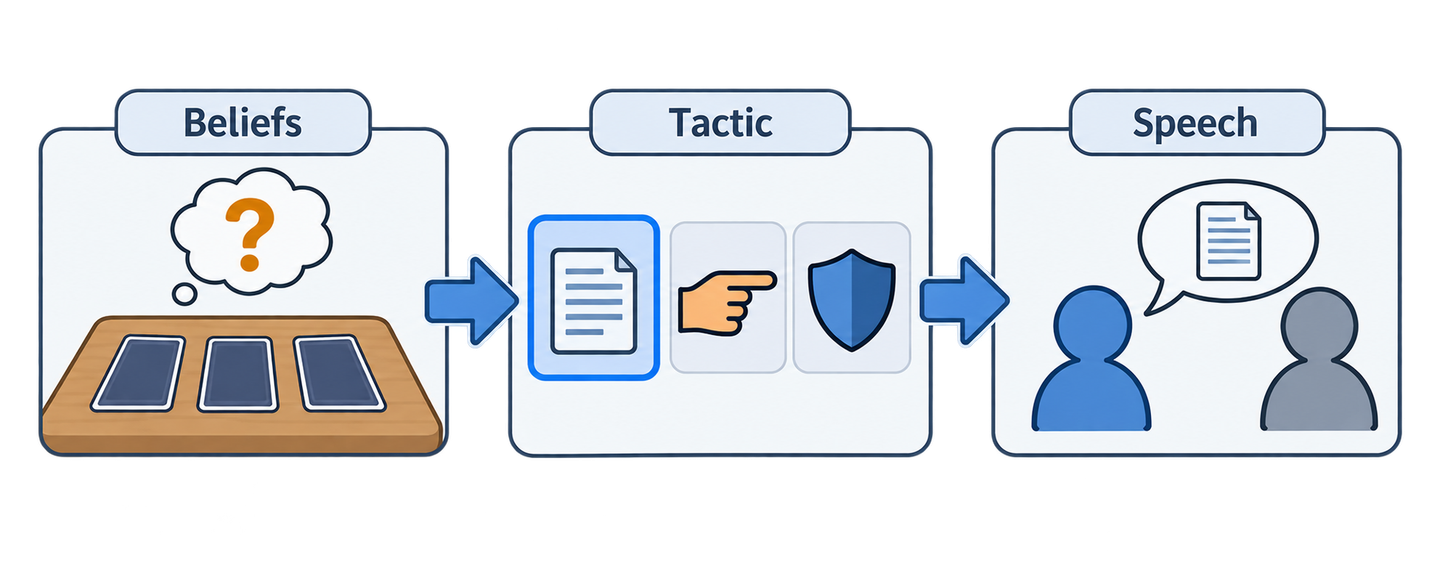
A character's speech needs a strategy behind it
Give a social-deduction character a purpose for speaking, then inspect what its statement lets the listener do.
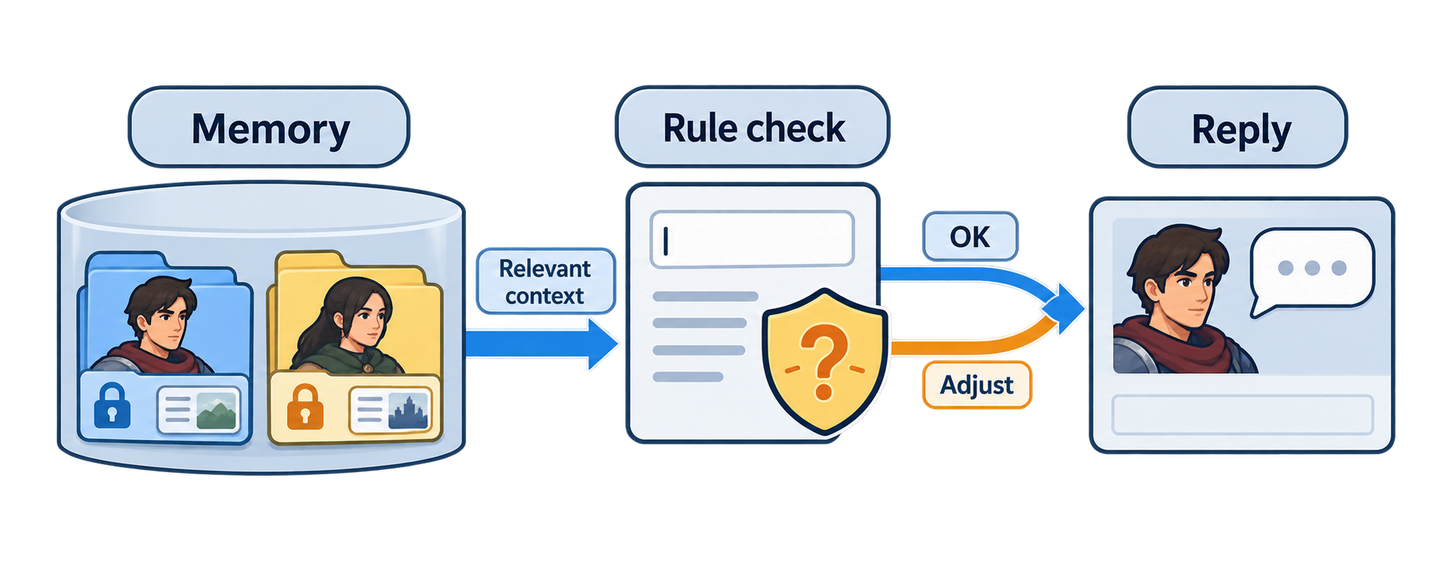
Keeping a generated conversation inside the game's narrative
Track retained narrative commitments and response checks together, including how corrections change a later reply.
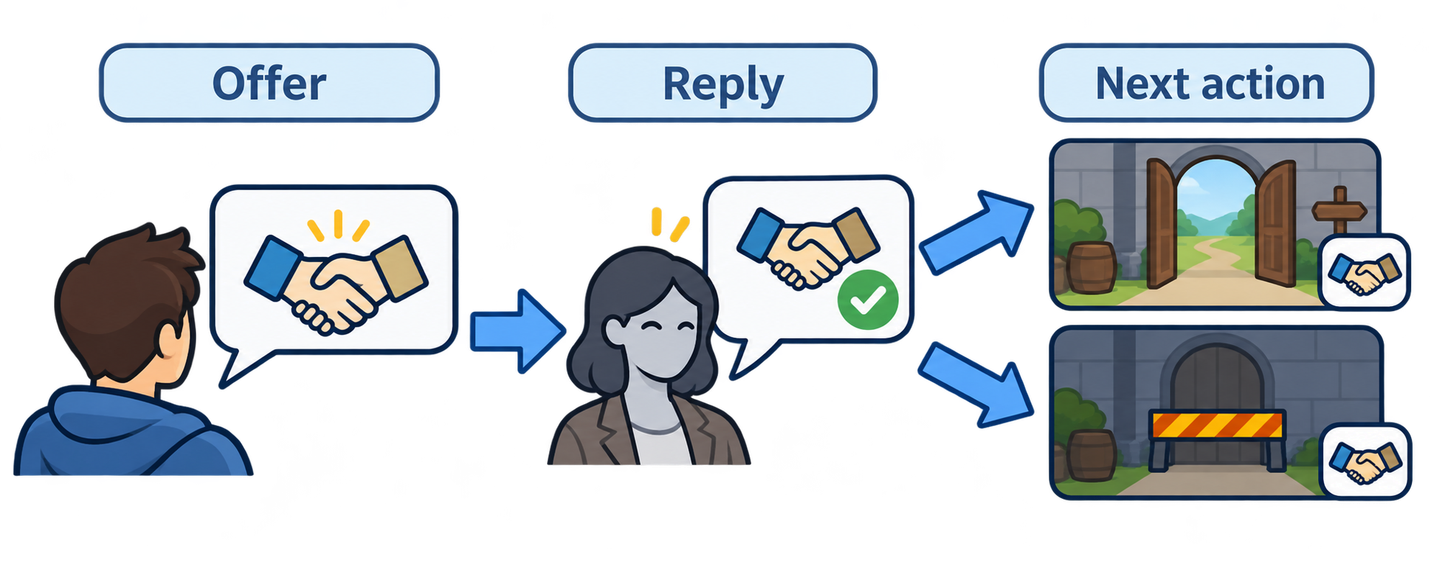
When a player's invented story branch reaches a dead end
Inspect what happens after an unexpected narrative offer before treating dialogue as a playable branch.
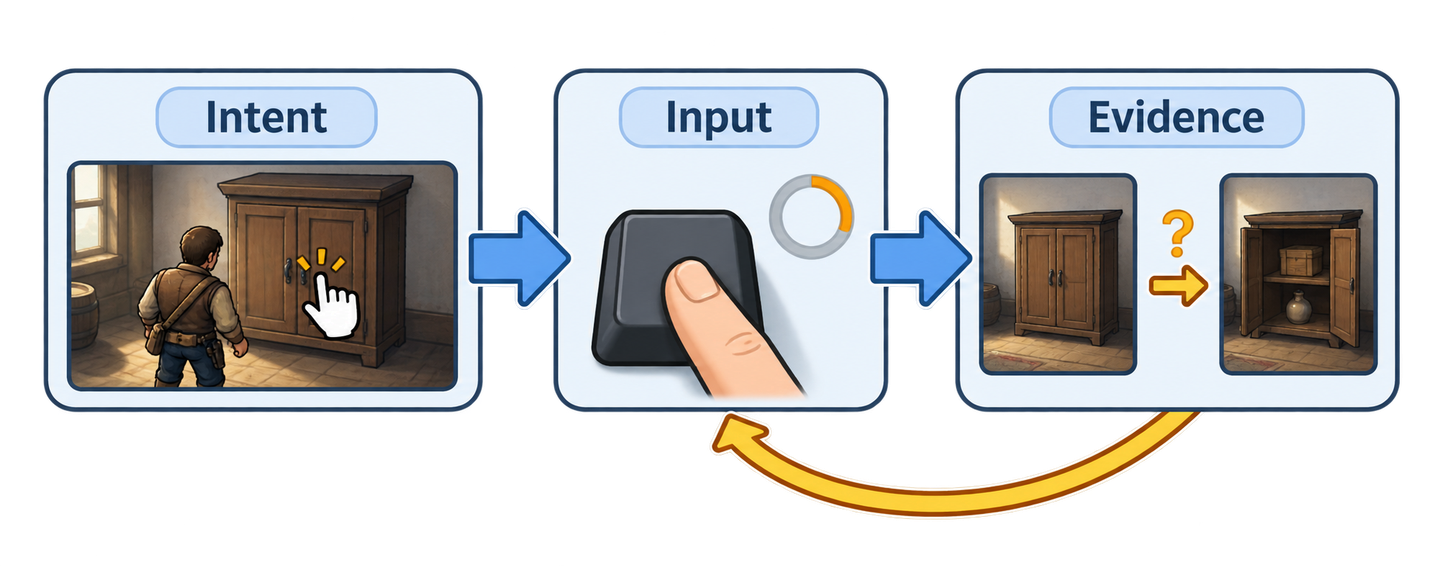
A plan needs evidence that its last action worked
Trace game-agent actions from issued input to observable consequences before repairing the planner.
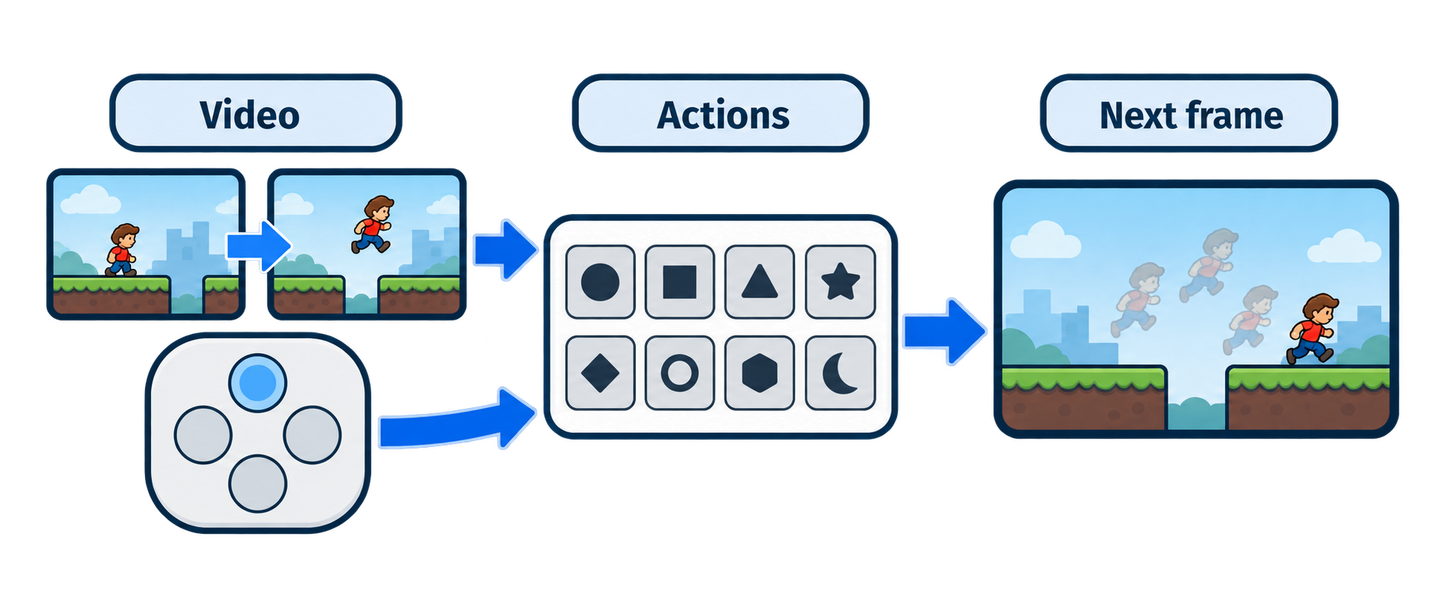
How controls can emerge from videos without action labels
Inspect a learned action's effects across scenes before giving the control a familiar name.
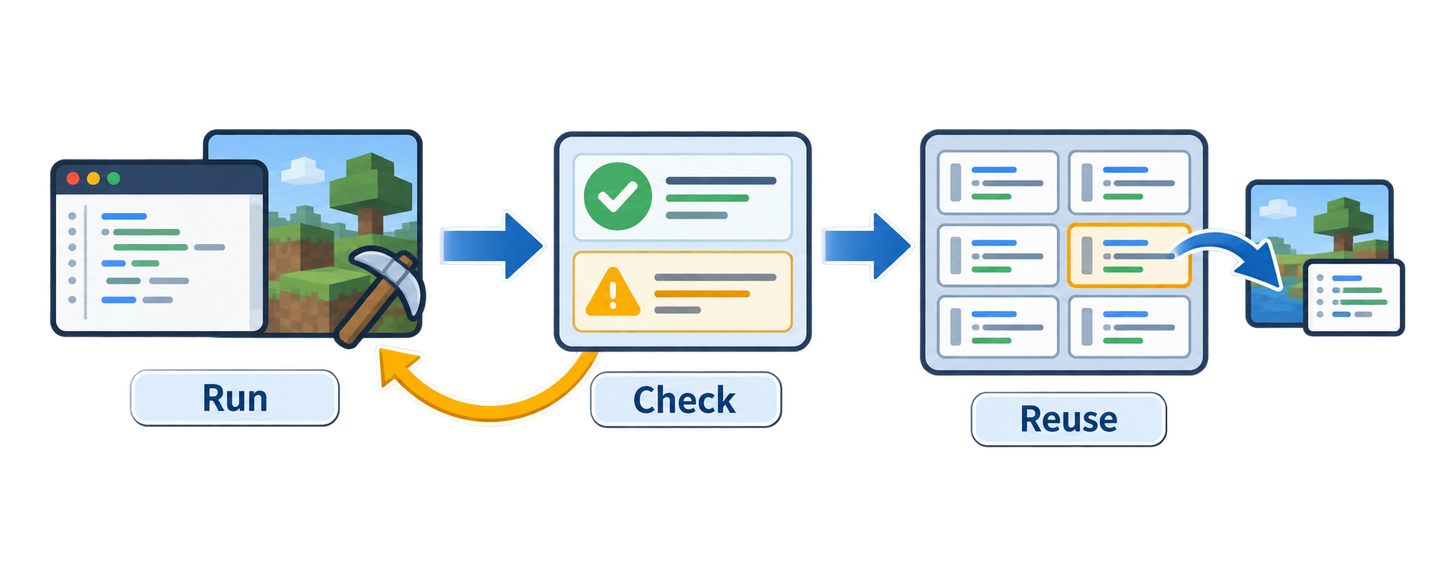
What an agent should keep after a successful task
Keep an executable routine together with the conditions and checks that justify reusing it.


